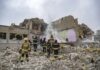

A Houston ICE traffic stop ended in a fatal shooting of a Mexican father who was not the intended target, and his sons say they only learned he was dead by watching video of his body online.
Story Snapshot
- ICE says driver Lorenzo Salgado Araujo rammed an unmarked vehicle and tried to run over an officer, who fired in self-defense.
- DHS later confirmed Salgado Araujo, a 52-year-old construction worker and Mexican national, was not the original target of the operation.
- His sons say they discovered their father’s death through videos and news reports, not a direct government notice.
- The shooting comes amid a wider pattern of vehicle-related ICE shootings justified as self-defense and now under federal review.
ICE Operation Ends With Wrong Man Killed
On July 7, 2026, Immigration and Customs Enforcement agents tried to stop a white construction van in Houston’s East End as part of a targeted immigration operation. The driver was 52-year-old Mexican national **Lorenzo Salgado Araujo**, heading to finish work on several homes with his crew. Federal officials later confirmed he was living in the United States without legal status and was caught up in an operation aimed at another person, not him. He was shot during the stop and later died at the hospital.
The Department of Homeland Security posted and repeated a clear narrative: agents attempted a vehicle stop around 6:50 a.m., and Salgado Araujo “rammed an ICE law enforcement vehicle, refused to follow multiple verbal commands, and weaponized his vehicle in an attempt to run over an ICE law enforcement officer, resulting in our officer firing his weapon in self-defense.” Media reports citing the same statement say his van struck an Immigration and Customs Enforcement vehicle before the agent opened fire. That framing has guided early federal responses.
Family Learns Of Death From Viral Video
While Washington pushed out its version of events, Salgado Araujo’s family was left in the dark. His sons say they did not get a direct phone call or knock on the door from Immigration and Customs Enforcement or the Department of Homeland Security before the press release went out. Instead, one son says he first saw his father’s body lying next to the work van in a video circulating on social media, then realized from news coverage that this was his dad. For many conservative readers, that raises basic questions about respect, due process, and how our government treats families after a use of deadly force.
Local and international outlets report that Texas Democratic Representative Sylvia Garcia criticized the Department of Homeland Security for announcing Salgado Araujo’s death to the media before the family was informed. Houston Public Media likewise describes relatives learning details from reporters while they were still seeking basic information. That breakdown in communication does not change the legality of the shooting, but it does touch core values: the duty of government to act with basic decency, and the expectation that families are told privately before their grief becomes content online.
DHS Self-Defense Claim And Early Investigations
Federal officials have been consistent on one point: they say this was **self-defense**. The Department of Homeland Security and Immigration and Customs Enforcement told outlets like CNN and ABC News that Salgado Araujo tried to evade arrest, collided with an agency vehicle, and “weaponized” his van by attempting to run over an officer, prompting the agent to fire. A Houston segment quoting an Immigration and Customs Enforcement spokesperson repeats that he “used his vehicle as a weapon” and that the agent “fired in self-defense.” Under Trump’s Department of Homeland Security, officers who can reasonably claim an immediate threat are strongly defended.
Two federal probes are now under way. Immigration and Customs Enforcement says the Department of Homeland Security Office of the Inspector General is investigating the shooting. The Federal Bureau of Investigation’s Houston field office is looking into a possible assault on a federal officer, a standard step when a vehicle is alleged to be used as a weapon against agents. For rule-of-law conservatives, this two-track review matters: one side checks the officer’s use of force, the other looks at any crime against the officer. The mayor of Houston has said the city will not launch its own investigation while the federal inquiries continue.
Unmarked Vehicles, No Body Cameras, And A Wider Pattern
Reporters and advocates are raising questions about the way the stop was carried out. A Texas Tribune journalist told PBS that Immigration and Customs Enforcement agents were in **unmarked vehicles** when they followed and stopped Salgado Araujo’s van. His son believes his father did not realize immigration agents were trying to pull him over, which could explain why he appeared to try to drive away. ABC News notes that officers were not wearing body cameras, and no dash camera footage of the actual shooting has been made public. That leaves a gap between the official self-defense claim and what the public can independently verify.
Gov. Greg Abbott confirms Texas Rangers investigation into ICE shooting of Lorenzo Salgado Araujo https://t.co/ggNafHGiDW
— Mz Constitution (@MzConstitution) July 16, 2026
This case also fits into a broader pattern that should concern anyone who cares about accountable law enforcement. Investigations and reporting have documented at least nine incidents in recent months where immigration officers fired on people in vehicles and later justified each shooting as self-defense, often citing claims that the driver “rammed” a vehicle or tried to run over agents. A long-term review of Immigration and Customs Enforcement shootings from 2015 to 2021 found dozens of uses of deadly force and no criminal indictments of agents. For conservatives who back strong borders and support officers, this raises a hard but necessary question: are federal standards and oversight strong enough to defend both public safety and individual rights?
Sources:
cbsnews.com, washingtonpost.com, cbc.ca, youtube.com, houstonpublicmedia.org, theatlantic.com, cnn.com, time.com, reuters.com