
What Big Tech Doesn’t Want You to Know
A deportation policy you can’t debate in daylight is exactly the kind that ends with police taking reporters’ phones in a foreign capital.
Quick Take
- Cameroonian police detained four journalists and a lawyer in Yaoundé after they interviewed U.S. deportees held at a state-run compound.
- Reports describe a quiet “third-country” deportation arrangement that placed non-Cameroonian African nationals in Cameroon despite U.S. court protection orders.
- Police confiscated cameras, laptops, and phones; at least one reporter was reportedly slapped or beaten before authorities released the group without known charges.
- The story spotlights two pressure points at once: immigration enforcement that relies on secrecy and the predictable crackdown on the people trying to document it.
The Yaoundé Detentions: What Happened and Who Got Swept Up
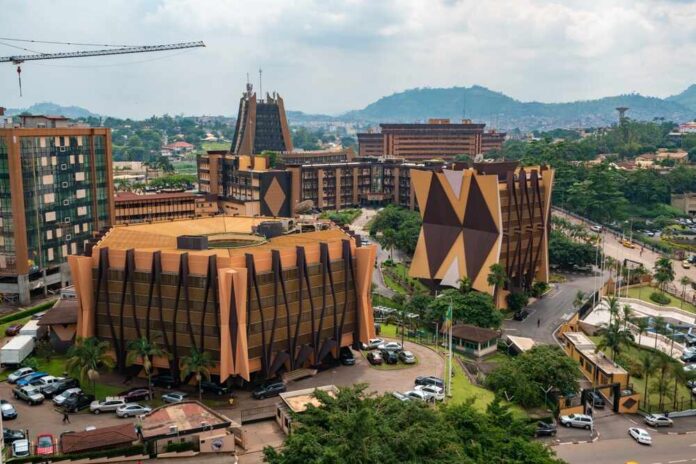
Cameroon’s capital, Yaoundé, became the choke point for a story both governments seemed to prefer stayed small. Four journalists—three Associated Press reporters based in Cameroon and freelancer Randy Joe Sa’ah, formerly associated with the BBC—entered a government detention center to interview African immigrants deported from the United States. Police detained them alongside lawyer Joseph Awah Fru, separated them, interrogated them at judicial police headquarters, and seized their equipment before later releasing them.
Authorities reportedly treated the reporting itself like contraband. Accounts say an AP journalist was slapped or beaten during the detention, with devices taken that would normally hold the very proof needed to verify conditions and testimony. No publicly confirmed charges accompanied the arrests, and Cameroon’s Ministry of Justice did not provide an on-the-record explanation in the reporting that followed. The immediate result wasn’t just a disrupted interview—it was the sudden disappearance of notes, images, and contact trails.
The “Third-Country” Deportation Pipeline and Why It Raises Alarms
The deportees at the center reportedly include around 15 African nationals who are not citizens of Cameroon. The key detail is the alleged mismatch between where the United States removed them to and the legal protections they carried. Multiple accounts describe these individuals as having U.S. court protection orders tied to fears of persecution if returned to their home countries. Routing them to Cameroon functions as a workaround only if nobody asks too many questions—or if the questions get punished.
Secrecy is not a harmless administrative preference; it’s a tell. Reports emphasize that no public announcement from the White House or State Department described a formal U.S.-Cameroon arrangement for this program. That silence matters because third-country transfers require crisp public rules to maintain legitimacy: notice to the person being removed, clarity on what comes next, and accountability for who bears custody and costs. When policy operates like a backchannel, the line between enforcement and evasion gets thin.
Pressure Inside the Compound: “Go Home or Stay Here Forever”
Accounts from the reporting describe Cameroonian officials pressuring detainees to return to their home countries, paired with the threat of indefinite detention if they refuse. That dynamic is the kind that rarely survives sunlight, which explains why journalists and a lawyer would become targets instead of witnesses. Fru’s public criticism captured the central democratic issue: the state cannot credibly insist the public has no right to know where non-citizens are held, under what authority, and for how long.
This is the policy trap that should bother conservatives and civil libertarians for different reasons. Immigration enforcement depends on public confidence that rules apply consistently and that government doesn’t hide the ball. The moment a system relies on undisclosed deals and unexplained detention, it stops looking like orderly border control and starts looking like improvised government power. Americans can support removal of people without legal status and still demand transparent procedures and verifiable custody standards.
Press Freedom Isn’t a Slogan When Cameras Get Taken
Detaining journalists at a sensitive facility delivers a simple message to every newsroom: try again and you may lose more than a memory card. Confiscating phones and laptops isn’t a neutral security step; it threatens sources, exposes contacts, and chills future reporting. For readers who remember when foreign bureaus actually had budgets, the detail that matters isn’t just the hours in a cell. It’s the long-term effect of making basic newsgathering feel like a crime scene.
Reports also show the familiar fog of accountability. Officials were reportedly hard to reach, comments were limited, and facts about the detention leaned heavily on what journalists and the lawyer could recount after release. That asymmetry—government controlling access, documents, and custody while refusing to answer questions—creates the perfect environment for rumors to grow. Governments that value stability should prefer the opposite: clear statements, consistent rules, and predictable legal channels.
The Legal Shadow Hanging Over Quiet Deportation Schemes
The Cameroon episode landed as U.S. courts were already scrutinizing third-country deportation practices elsewhere. Reports referenced a recent federal court ruling involving removals to El Salvador that criticized lack of notice and due process. The parallel is obvious even without identical facts: when people with court protections end up in a different country under a program the public can’t fully see, the next stop is usually litigation. Courts don’t need to oppose enforcement to demand procedure.
Common sense says durable immigration policy looks boring on purpose: published agreements, written standards, predictable hearings, and paperwork that can survive hostile review. “Shady deals in the dark,” as described by Fru, may move people faster for a week, but they often collapse under legal pressure and political backlash. If the goal is credibility, the solution is not less transparency—it’s enough transparency that even critics can’t claim the system runs on improvisation.
4 journalists detained in Cameroon reporting on Trump’s deportations https://t.co/iD5vPM3eCv
— Brian Craig 🇺🇸 (@BrianCraigShow) February 20, 2026
The open loop now is simple and unresolved: what happens to the deportees and the seized devices. The journalists walked out, but the reporting suggests their equipment did not. The deportees remained in the compound as of the accounts cited, with pressure to “voluntarily” leave under a threat of indefinite confinement. A policy that needs confiscated laptops to function is a policy begging to be challenged, and a government that can’t explain itself invites suspicion it could have avoided.
Sources:
Reporters Arrested at Trump’s Secret Deportation Compound in Cameroon
Journalists arrested in Cameroon while reporting on Trump’s secretive deportation program
Journalists detained while investigating U.S. deportees in Cameroon
Journalists arrested in Cameroon while reporting on Trump’s secretive deportation program