
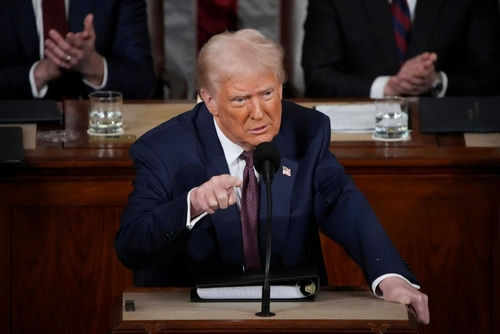
Trump’s warning to Iran—“THEY BETTER NOT” retaliate—or face “a force that has never been seen” signals a high-stakes break from the era of endless talk and weak deterrence.
Quick Take
- U.S. and Israeli forces launched large-scale strikes on Iranian military, nuclear, and government-linked targets around February 28, 2026, as diplomacy stalled.
- President Trump publicly warned Iran against counterattacks and framed the operation as dismantling nuclear, missile, naval, and proxy capabilities.
- Iran responded with missiles and drones aimed at Israel and multiple U.S. bases across the Gulf region, pushing the situation toward a broader conflict.
- U.N. Security Council members split sharply, with Iran, China, and Russia pressing condemnation while others urged negotiations and criticized Iran’s strikes.
Trump’s Message: Deterrence First, Retaliation Will Be Met
President Donald Trump used a Truth Social video and posts to define the U.S. position after the February 28 strikes: Iran’s nuclear and missile programs, naval capabilities, and proxy support networks were described as targets, and Tehran was warned not to counterattack. Trump also urged Iranians to rise up against their rulers, a notable political signal alongside the military campaign. The messaging is direct—deterrence through consequences rather than diplomacy without enforcement.
Israeli Prime Minister Benjamin Netanyahu echoed the theme that negotiations had been “fruitless,” aligning Israel’s security argument with Washington’s demand that Iran dismantle its nuclear program rather than bargain around it. The available reporting indicates the operation’s scope exceeds prior exchanges, including the 2025 strikes, and includes leadership-focused targeting. Some claims remain uncertain, including reporting around Iran’s top leader, underscoring how fast-moving battlefield claims can outpace confirmed facts.
From Oman Talks to Airstrikes: How Diplomacy Collapsed
Iran signaled on February 24 that a nuclear deal was within reach if diplomacy was prioritized, and Oman described potential progress in mediated talks by February 27. U.S. frustration centered on Iran’s refusal to fully dismantle its nuclear program, according to the research summary and cited reporting. When talks did not produce that outcome, the U.S. and Israel moved to strikes within days. The sequence highlights a hard line: talks are not the objective; verifiable dismantlement is.
The wider context includes Trump’s revived “maximum pressure” approach, which began in his first term and intensified after his return to office. The research cites earlier major actions such as Operation Midnight Hammer in June 2025, described as a devastating strike on nuclear facilities, as well as sanctions and the earlier terrorist designation of the IRGC. This approach is consistent in one key respect: it prioritizes constraining hostile regimes through leverage and force over international consensus-building.
Iran’s Retaliation Expands the Battlefield Across the Gulf
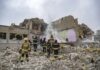
Iran retaliated with missiles and drones aimed at Israel and U.S. bases in Bahrain, Jordan, Kuwait, Qatar, Saudi Arabia, and the United Arab Emirates, according to the cited reporting. That geographic spread matters because it pulls multiple host nations and U.S. installations into the risk envelope, raising the odds of casualties or miscalculation. The research also notes reports of more than 60 student deaths tied to a strike on a school in Minab, a claim attributed to Iranian state media and not independently verified in the summary.
Reports also state that IRGC Commander Mohammed Pakpour and Defense Minister Aziz Nasirzadeh were killed, a development that would disrupt command and control if confirmed as described. Separately, the status of Supreme Leader Ali Khamenei is presented as unconfirmed, with speculation affecting succession planning. These details illustrate why the campaign is described as “days not hours”: leadership disruption, infrastructure degradation, and deterrence signaling are being pursued simultaneously while Iran attempts to show it can still strike back.
U.N. Scramble and the Constitutional Question at Home
Iran, with support from China and Russia, pushed for U.N. Security Council action, while U.N. officials warned about escalation and some European statements urged a return to talks while criticizing Iran’s retaliatory strikes. The Security Council scheduling under the “Middle East” agenda reflects the international stakes, but it also reminds Americans of a recurring reality: global bodies often become venues for adversaries to reframe events as “aggression,” regardless of the underlying nuclear and proxy concerns that triggered the crisis.
Trump Warns Iran 'THEY BETTER NOT' Counter Attack Or 'WE WILL HIT THEM WITH A FORCE THAT HAS NEVER BEEN SEEN!' https://t.co/8cU0bm6GFV
— Mediaite (@Mediaite) March 1, 2026
For a conservative audience wary of government overreach at home, foreign crises also raise basic accountability questions: what objectives are being pursued, what is the endpoint, and how will Americans measure success and safety. The available facts indicate the administration is describing specific targets—nuclear, missile, naval, and proxy capabilities—while warning that retaliation will bring overwhelming response. Some operational claims remain fluid, and key details, including certain casualty reports and leadership status, require ongoing verification as events unfold.
Sources:
Emergency meeting on the military escalation in the Middle East