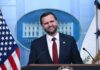

When the Los Angeles Dodgers filed into the White House to celebrate their back‑to‑back World Series titles, the event was less a political flashpoint than a return to one of American sport’s most enduring civic rituals — with President Trump leaning heavily on humor and showmanship to turn the Rose Garden into a stage for champions.
Key Points
- The Dodgers have twice visited President Trump’s White House as World Series champions, treating the ceremony as a continuation of a decades‑old baseball tradition.
- The 2025 Rose Garden event formally honored the Dodgers’ historic back‑to‑back titles and featured Trump’s characteristic mix of praise, jokes, and detailed game retelling.
- Players and executives presented Trump with a team jersey and a World Series ring, reinforcing the visit as a celebratory, not adversarial, occasion.
- While some fans and commentators objected, both the club and the White House framed the visit squarely as a championship celebration within a long‑standing sports‑and‑presidency ritual.
The Dodgers’ Championship Visits: Tradition More Than Drama
The Los Angeles Dodgers’ visits to the White House under President Trump sit inside a much older pattern: championship teams making the pilgrimage to 1600 Pennsylvania Avenue after a title run. In April 2025, the Dodgers traveled to Washington during an East Coast road trip to be honored for their 2024 World Series victory. The club entered the East Room to “I Love L.A.,” posed with the President, and toured the Oval Office, with manager Dave Roberts and veterans such as Clayton Kershaw treating the occasion as a milestone of a career spent in the game’s spotlight. A year later, after the team clinched a second consecutive championship, they returned, this time for a Rose Garden ceremony focused on their 2025 title and the rarity of back‑to‑back World Series crowns. In both cases, the official framing from Major League Baseball, the Dodgers, and the White House was unambiguous: this was about honoring champions, not litigating politics.
That clarity matters because modern White House sports ceremonies often attract controversy. Some players decline invitations; some fans see attendance as an endorsement of the sitting president. Yet the Dodgers organization answered those pressures by publicly embracing the visit as part of “long‑standing baseball tradition,” explicitly describing the trip as an honor tied to their on‑field accomplishments rather than a partisan gesture. The result was a pair of events that, on the ground, looked far more like old‑fashioned civic pageantry than a culture‑war battle.
Inside the Rose Garden: Humor, Storytelling, and a Historic Team
The 2025 ceremony in the renovated Rose Garden captured both the formality of a presidential event and Trump’s particular style. The White House’s own video feed billed it as “President Trump Hosts the Los Angeles Dodgers, 2025 World Series Champions,” and the structure followed a familiar script: presidential remarks, recognition of ownership and team leadership, a recap of the season, then player gifts and photos. What distinguished this event was how granular Trump’s baseball storytelling became and how often he reached for humor to connect with the players and the crowd.
Trump opened by congratulating the Dodgers as “repeat champions,” underscoring that the franchise had never before gone back‑to‑back. He then pivoted into a detailed retelling of their season: nine injured pitchers before Opening Day, a 229‑day slog that made the 2025 campaign the longest in MLB history, and a postseason in which the front‑line rotation — Blake Snell, Tyler Glasnow, Shohei Ohtani, and Yoshinobu Yamamoto — buried opponents with a microscopic 0.63 ERA in the National League Championship Series. That level of specificity, more typical of a die‑hard fan than a head of state, set the tone: this was a ceremony anchored in the particulars of how the Dodgers actually won.
Much of the speech revolved around Ohtani, whom Trump compared repeatedly to Babe Ruth. Ohtani’s third straight unanimous league MVP award and 55 home runs became a foil for jokes about how “unfair” it was for one team to have a hitter and pitcher of that caliber rolled into one. Trump described a game in which Ohtani threw six shutout innings and hit three home runs as “maybe the greatest game ever played by one person,” mixing legitimate awe with theatrical exaggeration. When he turned to Kershaw’s final appearance, he recalled the veteran escaping a bases‑loaded jam on his last pitch, then ribbed him about whether he’d come out of retirement if the Dodgers begged — a question Kershaw batted away with a laugh in clips that circulated widely afterward.
Gifts, Jokes, and the Symbolism of Rings and Jerseys
Championship visits traditionally involve tokens of respect from the team to the President, and the Dodgers leaned into that ritual. At the Rose Garden event, owner Mark Walter and team leaders presented Trump with a Dodgers jersey — branded with his preferred number and nameplate — and what was described as a World Series championship ring. The image of a sitting President slipping on a baseball championship ring is inherently theatrical; Trump amplified that theater by joking about whether he was now part of the team, and about the ring’s value and size, feeding the cameras the kind of moment they came for.
For the players, these gifts operated less as political statements than as artifacts of a once‑in‑a‑career run. World Series rings are designed as symbols of collective achievement, and presenting a replica to the President is a long‑standing gesture that says, in effect, “you’re part of the story of this season, too.” That symbolism was reinforced by the Dodgers’ own messaging, which cast the visit and the presentation as an extension of their championship tour — a stop alongside parades, rally days, and community events.
Continuity and Change in the White House Sports Ritual
To understand why the Dodgers’ visits looked the way they did, you have to situate them within the broader history of sports and the presidency. For decades, championship teams in major American sports have been invited to the White House as a way of marking their achievement and reinforcing a kind of civic narrative: in a vast country, sport is one of the few institutions that can still produce shared moments of excellence. The Dodgers themselves have lived through that continuity and change. Their 2020 World Series title was celebrated under President Biden in 2021; their later championships brought them back under President Trump. Different administrations emphasized different themes, but the core ritual remained: champions are honored, trophies and rings are displayed, and players experience the seat of national power from the inside.
Under Trump, that ritual acquired a more overt layer of personal branding. The 2025 ceremony doubled as a showcase for the redesigned Rose Garden, which Trump described as a response to the practical problem of soggy grass and an opportunity to build a “Presidential Walk of Fame” featuring plaques from Washington to Trump. The Dodgers thus found themselves not only at the center of a sports celebration, but also part of a broader narrative about renovating the physical White House and, implicitly, leaving a mark on its iconography. Yet even here, the mutual benefit was clear: the administration gained vivid footage of the President amid winners, and the Dodgers gained another line in their organizational history — champions feted at the White House, again.
Controversies at the Edges, But a Stable Core Story
None of this unfolded in a vacuum. Some Dodgers fans and broader observers objected, particularly to the optics of gifting Trump a World Series ring; social media reactions ranged from mocking to outright hostile, with critics calling the gesture “cringe” or branding Trump with familiar epithets. Earlier reporting had noted that, during Trump’s first term, certain players around the league declined White House invitations, and Dodgers figures themselves had once suggested they might avoid such a visit. Those tensions did not disappear simply because the team kept winning.
Yet the available record shows that, by the time of their 2024 and 2025 titles, the Dodgers collectively chose to attend and consistently described the experience in positive, non‑partisan terms. Roberts, who had previously been wary, told reporters after the 2025 visit that walking into the Oval Office single file with his players had been “a really good experience,” emphasizing awe rather than ideological alignment. League‑level coverage framed the trips as “a great honor” and part of a tradition that the organization intended to uphold so long as it kept winning. That divergence — sharp criticism online, steady enthusiasm within the clubhouse and front office — underscores a broader truth of modern sports: the meaning of a gesture often depends on where you’re standing.
Why These Visits Matter Beyond One President or One Team
When you strip away the noise, the Dodgers’ championship visits to the Trump White House tell you something about how sport, politics, and institutional ritual interact today. On the one hand, these events are increasingly read through partisan lenses: attendance becomes fodder for debate, clips are repurposed in broader narratives about support or resistance, and every joke is scrutinized for subtext. On the other hand, for the participants — players, coaches, executives — the visit remains primarily about recognition of excellence, about a group that spent 229 grinding days together receiving a formal, national “well done.”
President Trump’s humor and theatricality did not fundamentally change that equation; they colored it. His jokes about Ohtani’s superhuman talent, his teasing of Kershaw, his riffing about the Rose Garden’s soggy past and helipad future made the Dodgers’ ceremony feel different from a more reserved presidential script. But the core of the story stayed intact: a roster that had just done something historically difficult — win consecutive World Series — stood together at the White House, was told in front of the country that it had accomplished something extraordinary, and walked out with one more shared memory that only champions get.
Sources:
youtube.com, abc7.com, whitehouse.gov, sports.yahoo.com, usatoday.com, thehill.com, marca.com, dodgerblue.com, latimes.com, washingtontimes.com, espn.com