
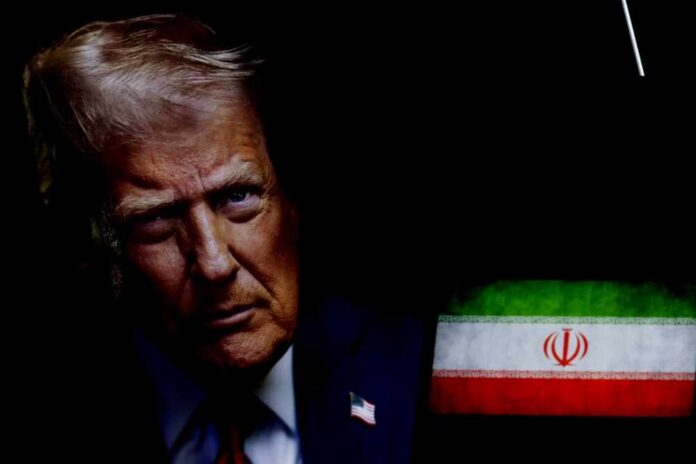
An Iran war, a shaky ceasefire, and a sour market are colliding into a political stress test for the “America First” coalition that helped return Donald Trump to power.
Quick Take
- Polling and reporting suggest a widening split inside the GOP between older, hawkish voters and younger conservatives who oppose a prolonged Iran conflict.
- Market declines and oil-price fears are amplifying public anxiety as Washington remains consumed by shutdown politics and wartime messaging.
- A high-profile resignation and public criticism from right-leaning intellectuals highlight real internal strain, even as broader MAGA support for confronting Iran remains strong.
- The “MAGA losing streak” framing is overstated: the evidence points to a generational crack-up more than a total collapse of Trump’s base.
Iran conflict turns “America First” into a governing dilemma
President Trump’s second-term agenda is being judged through a familiar conservative lens: avoid endless foreign entanglements, keep energy affordable, and put domestic stability first. Reporting describes the Iran conflict entering its second month with a two-week ceasefire that is described as tenuous, while public messaging mixes promises of peace with threats of escalation. That contradiction matters politically because it blurs the meaning of “America First” in practice, not just in campaign rhetoric.
Supporters who prioritize strength abroad argue that Iran is a clear enemy and that decisive action protects Americans and U.S. interests. But critics inside the broader MAGA world say the public still lacks a clear endgame, a concern sharpened by memories of post-9/11 wars that cost thousands of American lives and trillions of dollars. With Republicans controlling Congress, Democrats have fewer procedural levers, but they still benefit when GOP voters argue publicly about war aims.
Polling points to a generational fracture, not a total base collapse
One of the most consequential data points is age. Reporting citing survey results indicates overall approval for the war is low and that opposition is especially intense among younger Americans, including younger conservatives. That is a real strategic problem because younger male voters were central to the 2024 coalition, and midterms traditionally suffer from weak turnout even in good economic conditions. A ceasefire, even if real, does not automatically restore enthusiasm if voters think the conflict can restart overnight.
At the same time, coverage of internal MAGA weakness can be misleading when it treats “the base” as one unified bloc. Other polling referenced in reporting suggests a large share of self-identified MAGA voters still supports confronting Iran. Put plainly, the evidence supports two realities at once: strong backing from many core voters and sharp resistance from a younger slice that Republicans cannot easily replace. That kind of split can be survivable in the short run yet corrosive over multiple election cycles.
Resignations and right-leaning critiques raise stakes for accountability
Personnel drama is also shaping the storyline. Reporting highlights the resignation of a top counterterrorism official, Joe Kent, who objected to the Iran war and publicly blamed outside influence for pushing U.S. policy in that direction. Those claims are serious but difficult for the public to evaluate from the available facts alone. What is verifiable is the political effect: resignations signal dissent inside government and give voters permission to doubt whether decisions are being made transparently and for strictly national reasons.
Intellectual and media-world criticism adds another layer. Commentators cited in coverage argue the war could “break” Trumpism by pulling it toward the kind of open-ended interventionism many conservatives now associate with elite failure in Washington. That argument resonates with voters—right and left—who believe institutions protect themselves first and families last. Still, one week of headlines does not prove a movement is collapsing; it proves that a faction is willing to fight publicly over what the movement stands for.
Markets, energy costs, and shutdown politics intensify voter anger
Economic pressure is the accelerant that turns a policy dispute into an electoral problem. Coverage ties market declines to war uncertainty and broader volatility, describing notable drops in major indexes and heightened anxiety about oil and inflation. For conservatives already frustrated by years of high costs and elite-driven policy experiments, another bout of instability feels like a penalty for decisions made far from their paychecks. For liberals worried about inequality, the same volatility reinforces distrust in establishment governance.
Washington’s dysfunction compounds the anger. Reporting also describes a government shutdown continuing alongside wartime decisions and talk of diverting security resources from one theater to another. The combined message to many Americans is bleak: leaders can move quickly when they want war, but cannot keep basic government operations stable. If the administration wants to neutralize “losing streak” narratives, the path is straightforward but hard—define objectives, disclose costs, and show measurable progress without drifting into another open-ended commitment.
Sources:
MAGA: Is Trump losing control of his base?
Iran war, Trump, MAGA and the youth vote heading into the midterms