
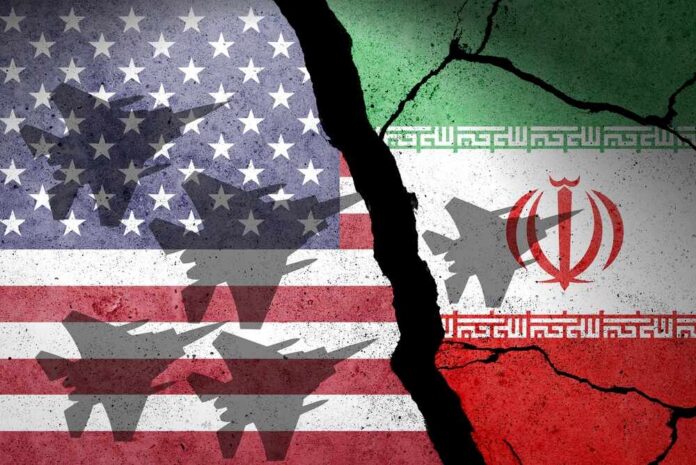
Trump’s Kharg Island strikes reopened a hard question for America First voters: are we defending U.S. shipping, or sliding into another open-ended Middle East war with no clear exit?
Story Snapshot
- On March 13, 2026, the U.S. Air Force struck more than 90 Iranian military targets on Kharg Island while sparing oil and gas infrastructure.
- Kharg Island is Iran’s primary oil export hub, tied to roughly 90% of Iran’s crude exports, and the Strait of Hormuz remains central because about 20% of global oil transits the chokepoint.
- President Trump publicly warned that U.S. strikes could expand to oil facilities if Iran continues disrupting shipping.
- Reports in late March said the administration was considering a blockade or even an occupation, but no ground invasion had occurred as of early April.
What Happened on Kharg Island—and What the U.S. Says It Targeted
U.S. forces launched a large-scale air raid on March 13, 2026, hitting military sites on Iran’s Kharg Island, including facilities linked to naval mines, missile positions, air defenses, and parts of the island’s base and airfield infrastructure. Iranian accounts described multiple explosions over roughly two hours. The administration’s messaging emphasized precision and discrimination: military targets were hit, while the island’s oil and gas export infrastructure was left intact.
President Trump called it one of the most powerful bombing raids in Middle East history and framed it as a response to threats against shipping through the Strait of Hormuz. In public remarks summarized by major outlets, the president also warned that if Iran continues closing or disrupting the waterway, the United States could escalate to strikes on energy assets. That escalation threat is the piece that has many voters asking where “deterrence” ends and “mission creep” begins.
Why Kharg Island Matters: Oil Leverage, Hormuz Risk, and U.S. Costs at Home
Kharg sits about 20 miles off Iran’s Gulf coast and functions as the backbone of Iran’s crude exports, with estimates placing about 90% of exports moving through the island’s facilities. The larger strategic issue is the Strait of Hormuz, the narrow maritime corridor that carries around one-fifth of global oil. When Iran threatens or blocks traffic, American families feel it quickly through energy prices and broader inflation pressure.
The administration’s approach—hitting weapons and air defenses but not oil terminals—signals a desire to force a reopening of shipping lanes without instantly detonating global prices. That logic is understandable, but it also highlights the trap: the longer the standoff lasts, the higher the odds that energy infrastructure becomes a bargaining chip for both sides. Conservatives who remember how quickly “limited” operations became decade-long commitments are right to demand clearer definitions of objectives, duration, and exit conditions.
Escalation Signals: Blockade or Occupation Talk Collides With “No New Wars” Expectations
By late March 2026, reporting indicated the White House was weighing more aggressive options, including a blockade or even occupying the island, with the goal of denying Iran the ability to use Kharg-based systems to threaten shipping. Trump also floated the idea publicly in an interview, aligning with earlier rhetoric about taking leverage in oil-related conflicts. As of early April, the available reporting still indicated no U.S. ground invasion had occurred.
Iran’s posture suggests it expects the debate to shift from airpower to ground control. Reports said Iran reinforced the island with additional personnel, defenses, and traps, while Iranian officials warned of severe consequences if oil facilities were attacked. Iran also claimed U.S. strikes were launched from the UAE, a point that remained disputed in available public reporting. The net effect is a volatile environment where miscalculation can turn “pressure” into a widening regional fight.
MAGA’s Split Screen: Defending Shipping vs. Another Regime-Change Spiral
Among Trump’s coalition, the division is less about whether Iran should be allowed to strangle global trade and more about how America responds without repeating the post-9/11 pattern of endless deployments. One side sees the strikes as a clear, bounded action to protect shipping lanes and deter mining or missile attacks. The other side sees the same events as the opening phase of a larger war—especially if Washington starts discussing occupation.
That skepticism is fueled by a recent memory conservatives share: Washington’s habit of promising short operations, then expanding the mission, then asking the public to accept higher costs and fewer freedoms “temporarily.” If the U.S. drifts toward an occupation, Congress and the public will likely demand sharper constitutional clarity on authorization, objectives, and oversight. Without that clarity, the political backlash inside the GOP could intensify even if the initial strikes were tactically effective.
What to Watch Next: Oil Targets, U.S. Ground Footprint, and Legal Guardrails
The next inflection points are visible. A second round of strikes that hits oil export infrastructure would almost certainly spike energy markets and raise the stakes for retaliation. A move to blockade or seize the island would be a major step toward a sustained ground footprint. Meanwhile, the administration’s “all options” posture keeps pressure on Tehran but also keeps American families guessing about how long this confrontation lasts and what it will cost.
For voters who are already exhausted by overspending, inflation, and high energy costs, the practical question is not whether Iran is a problem—it is whether Washington has a disciplined strategy that protects American interests without sliding into nation-building or regime-change fantasies. The Kharg operation may prove to be a contained strike for maritime security, but the public record also shows escalation talk. That gap is where trust gets lost.
Sources:
Kharg Island Iran war: What to know
Ground invasion soon? Why Kharg Island finds itself at the centre of Iran-US war