

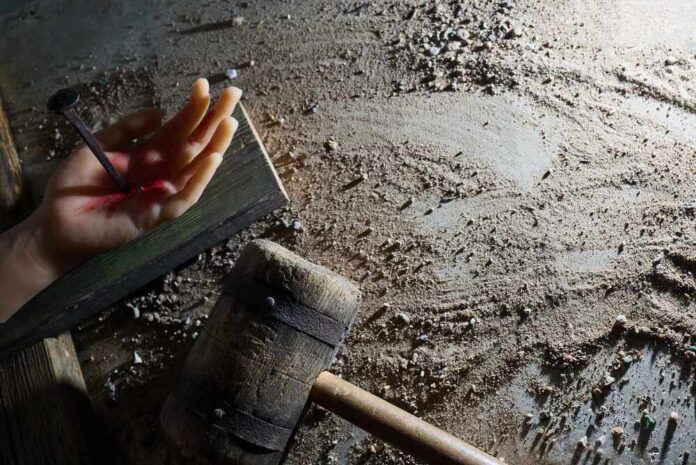
A 65-year-old Filipino man completed his 37th and final Good Friday crucifixion reenactment, but this year he drew the line at being whipped and beaten—raising questions about extreme religious devotion versus common sense limits on self-inflicted suffering.
Story Snapshot
- Ruben Enaje underwent his 37th crucifixion reenactment on April 3, 2026, after 40 years of annual participation in the Philippines tradition
- For the first time, Enaje declined the whipping, kicking, and beating typically part of the ritual, citing age and health concerns
- Modifications included only nailing palms (not feet), carrying a lighter 20-kilogram cross, and praying for global peace amid ongoing conflicts
- The Pampanga City Council formally recognized the crucifixion ritual as cultural heritage, institutionalizing a practice that blends Catholic tradition with folk customs
Four Decades of Devotion Concludes With Modified Ritual
Ruben Enaje, a carpenter and sign painter from San Pedro Cutud in Pampanga province, ended his 40-year commitment to annual Good Friday crucifixion reenactments with significant modifications to the traditional ritual. At 65 years old, Enaje explicitly requested that actors portraying Roman soldiers abstain from whipping, kicking, and hitting him during the April 3, 2026 ceremony. He also limited nail placement to his palms only, leaving his feet unharmed, and carried a lighter 20-kilogram wooden cross instead of the customary 37-kilogram version. Enaje dedicated his final crucifixion prayers to global peace, specifically mentioning conflicts affecting multiple nations.
From Divine Calling to Government-Recognized Heritage
Enaje began his crucifixion practice in 1986 following a three-story fall, which he interpreted as divine intervention requiring a spiritual response. He initially vowed to undergo crucifixion 27 times, completing that promise in 2013, but continued for an additional decade at the request of villagers seeking prayers for sick family members. The San Pedro Cutud ritual, which began in 1962, attracts between 5,000 and 10,000 participants annually, including flagellants who whip their backs until bleeding. The Pampanga City Council passed Resolution No. 071 designating the crucifixion reenactment as an official cultural heritage practice, formalizing governmental recognition of the extreme penitential tradition.
Health Concerns Override Tradition in Final Performance
Enaje’s wife, Juanita, urged him to retire from the annual ritual due to his advancing age and lung deterioration caused by prolonged exposure to paint fumes during his career. Despite completing 37 crucifixions over four decades, Enaje’s palms reportedly bore no visible scarring from the repeated nail placement. His decision to decline the physical punishment components while maintaining the crucifixion itself reflects a compromise between honoring tradition and acknowledging bodily limits. The COVID-19 pandemic forced a three-year hiatus from 2020 to 2022, after which Enaje resumed participation for his final years despite mounting health concerns from family members.
Tourism and Tradition Intersect in Philippine Catholicism
The crucifixion reenactments represent what religious scholars identify as the Philippines’ distinctive blend of Catholic tradition with indigenous folk superstitions and extreme penitential practices. Tourism officials acknowledge the ritual’s economic significance, as thousands of international and domestic visitors travel to San Pedro Cutud annually to witness the spectacle. Pampanga City Tourism Chief Ching Pangilinan confirmed participation levels ranging from 5,000 to 10,000 flagellants each year, demonstrating the practice’s enduring cultural appeal. Enaje’s retirement after 40 years raises succession questions about whether replacement participants will emerge to continue the tradition at its historic intensity level.
The modifications Enaje implemented in his final crucifixion—declining the whipping and reducing the cross weight—suggest recognition that even deeply held religious convictions must sometimes yield to physical realities and common sense health considerations. While the practice continues as recognized cultural heritage, the tension between traditional religious intensity and modern safety consciousness remains unresolved as younger generations assess whether to carry forward these extreme demonstrations of faith.
Sources:
Philippine man nailed to cross for 36th time to mark Good Friday – South China Morning Post
Veteran ‘Kristo’ ends 37-year crucifixion on Good Friday – Philippine Inquirer
Filipino villager nailed to cross for Good Friday – Fox 9 News