
A Los Angeles warehouse fire exposed how years of green-energy experiments and weak local oversight can still leave working families choking on smoke while politicians rush to grab emergency powers.
Story Snapshot
- A massive Boyle Heights cold-storage fire led Mayor Karen Bass to declare a local emergency over smoke and rotting food.
- The warehouse held about 85 million pounds of meat and other food, now spoiling as power and refrigeration failed.
- Officials say the worst chemical threats like ammonia are under control, but air quality has still turned “very unhealthy” in parts of the region.
- The blaze appears to have started on rooftop solar panels, raising fresh questions about rushed green mandates and safety.
How a rooftop blaze turned into a regional smoke and biohazard crisis
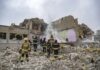
The Boyle Heights fire started Wednesday afternoon on the roof of a huge cold-storage warehouse run by Lineage Logistics, a company that stores frozen food for the supply chain.[2] Flames raced across solar panels on top of the 491,000 to 500,000-square-foot building, sending a dark smoke column over much of Los Angeles and forcing thousands of residents to shelter in place over fears of hazardous air.[2][6] Firefighters soon found an ammonia leak inside the facility and shifted to defensive tactics as small explosions were reported.[2][6][14]
Officials say crews quickly halted the spread of the flames that first night, but the fire never truly went out.[2] The building is built like a giant cooler, with steel walls packed with dense foam that can smolder for days and is hard to reach with water.[3][8] As winds shifted, hot spots flared again, sending new plumes of black and white smoke across East Los Angeles, the San Gabriel Valley, and even into nearby valleys.[2][4] For regular families, that meant repeated alerts, ash on cars, and a lingering smell of burned plastic and food.
Bass declares emergency as 85 million pounds of food rot in the dark
By Saturday, Mayor Karen Bass declared a local emergency to “secure resources” and support a joint response with Los Angeles County.[3][7][8][16] The goal is to tap the California Disaster Assistance Act and get state help for extended cleanup, shelter centers, and disposal of spoiled food and debris.[7][8] Los Angeles Fire Department Chief Jaime Moore said firefighters have contained the hazardous materials side and are now focused on a massive biohazard: about 85 million pounds of frozen meat and other food sitting in a dead freezer, heating up and starting to rot.[3][7][16]
Turning off the refrigeration to fight the fire left tens of millions of pounds of meat, fish, poultry, and other products stranded in a sealed box.[1][4][7] Officials warn that as this food breaks down, it can release strong odors and attract pests and bacteria, creating a long-term health and environmental headache for the community.[1][2][16] City and county leaders have opened smoke relief centers at places like Pecan Recreation Center and City Terrace Park for residents who need cleaner air and a place to escape the haze.[3][8][14] This is a reminder that when big infrastructure fails inside dense cities, it is regular working people who live with the fallout.
Air tests, smoke warnings, and what they are not telling residents
As news helicopters circled and social media filled with images of huge smoke clouds, many residents feared a full-blown toxic disaster. Air regulators and hazardous materials teams did pick up real problems. The South Coast Air Quality Management District reported that fine particle pollution, called PM2.5, reached “Unhealthy for Sensitive Groups” and even “Very Unhealthy” levels in parts of central Los Angeles County and nearby valleys after the fire.[2][4] That means seniors, kids, and anyone with asthma or heart issues faced real short-term risks from simply breathing outside.
At the same time, officials stressed what they did not find. Fire department hazardous materials teams, county hazardous materials teams, and air regulators all reported no significant ammonia readings in neighborhoods and no unusual toxic metals in the smoke beyond what they expect in a “normal” structure fire.[3][4][8][21] Early tests showed only brief spikes of certain elements like bromine and chlorine inside the plume, but still below short-term health limits.[2][7][15] Fire commanders repeated that message: the main threat now is smoke and particulates, plus the biohazard from spoiled food, not a runaway chemical cloud.[1][3][7]
Green mandates, local failures, and who pays the price
Reports say the likely ignition source was work on rooftop solar equipment owned by a third party, with the fire starting during testing on those panels before racing over the roof.[1][3][18] That detail matters for readers who have watched California leaders push aggressive green-energy mandates for years while often ignoring basic reliability, fire risk, and neighborhood impact. Solar technology can help when designed and managed well. But when panels sit over a giant freezer filled with industrial refrigerants and tens of millions of pounds of meat, there is no room for cut corners or weak oversight.
🚨🇺🇸#BREAKING | NEWS ⚠️
Airdrops continue for the Medline cold storage warehouse in Boyle Heights, Los Angeles. LAFD wants to collapse the roof as they continue to try to gain control of the fire which reignited and is still producing toxic smoke.A Boeing CH-470 Chinook with… pic.twitter.com/hep1iZc4VV
— Todd Paron🇺🇸🇬🇷🎧👽 (@tparon) June 21, 2026
Families in Boyle Heights and beyond now face the cost of decisions they never made. They were told to stay inside, shut windows, and even avoid air conditioners that pull outside air, while city leaders managed the cameras and the politics.[7][14] Under President Trump’s second term, federal emergency tools are on the table to backstop local efforts and protect public health, but local leaders still choose how sites are zoned, how projects are approved, and how honestly they speak to nearby residents. This fire shows what happens when dense urban communities become staging grounds for risky infrastructure without enough accountability.
Sources:
[1] Web – Los Angeles mayor declares emergency to fight Boyle Heights warehouse …
[2] Web – Boyle Heights shelter-in-place order lifted as LA firefighters …
[3] Web – What we know about Lineage storage facility – ABC7 Los Angeles
[4] Web – Thick black smoke and flames are erupting from a solar-paneled …
[6] YouTube – L.A. cold storage warehouse erupts in toxic inferno
[7] Web – ️Massive plume of thick black smoke seen for miles as firefight at …
[8] Web – View all – Instagram
[14] YouTube – Air quality still concern near burned down Boyle Heights building
[15] Web – This fire is now out – Instagram
[16] Web – Toxic Ash Cloud from Boyle Heights Warehouse Fire Affects …
[18] Web – Crews gain control of fire at Boyle Heights cold storage facility
[21] Web – Here’s what we know about the Boyle Heights warehouse fire – Reddit