
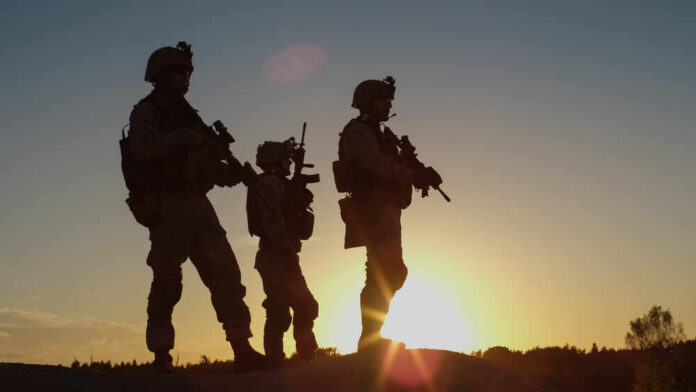
U.S. special forces pulled off a daring rescue of a downed Air Force colonel deep in Iranian territory, but at what cost to America’s promise of no new wars?
Story Highlights
- President Trump ordered high-risk CSAR operation behind enemy lines in Iran, rescuing F-15E Weapons Systems Officer after 24-hour evasion.
- CIA deception and special operations triumphed over IRGC hunters with no American fatalities, showcasing air dominance.
- MAGA base questions deepening U.S. involvement amid escalating clashes, echoing frustrations with endless foreign entanglements.
- Israeli strikes paused to aid intel; separate A-10 incident highlights rising Strait of Hormuz risks.
Incident Unfolds in Southwestern Iran
An F-15E Strike Eagle fighter jet went down over southwestern Iran’s mountainous terrain on Friday, April 3, 2026. The pilot ejected safely, communicated via onboard systems, and U.S. forces rescued him hours later. Initial combat search and rescue helicopters, HH-60H Jolly Green II models, took Iranian fire, sustaining damage and injuring crew members who landed safely. The Weapons Systems Officer, an Air Force colonel, separated during ejection, evading capture amid intensifying IRGC ground hunts.
Trump Directs High-Stakes Rescue Mission
On Saturday, April 4, President Trump monitored the situation from the White House Situation Room and ordered the rescue. CIA operatives ran a deception campaign, spreading false reports of the colonel’s prior extraction to mislead pursuers. Using unique intelligence capabilities, they pinpointed his location in contested enemy territory. Special Operations Forces inserted via MC-130J transports, supported by fighters, drones, and HC-130J Combat Kings. Ground teams exchanged heavy fire with IRGC forces during extraction.
Multiple U.S. aircraft landed deep in Iran; some faced mechanical issues and were demolished in place to prevent capture. The colonel sustained injuries but emerged alive, marking a successful forcible entry operation. Secretary of Defense Pete Hegseth briefed Trump throughout, emphasizing overwhelming air superiority that neutralized threats.
Strategic Coordination and Broader Clashes
Israeli forces halted strikes on Iran to support U.S. intelligence gathering, underscoring close alliance dynamics. A separate U.S. A-10 Warthog took enemy fire near the Strait of Hormuz but recovered its pilot safely. These events signal escalating direct U.S.-Iran confrontations, with IRGC aggressively pursuing downed airmen for propaganda leverage. U.S. strikes targeted advancing Iranian troops to protect rescue assets.
Trump confirmed the success on Truth Social Saturday evening: “WE GOT HIM! … This miraculous Search and Rescue Operation… He sustained injuries, but he will be just fine.” Air Force Special Warfare posted updates, praising the joint effort with no fatalities.
Implications for America First Policy
This operation validates U.S. special operations and CSAR prowess in denied areas, boosting military morale while exposing IRGC vulnerabilities. Yet for Trump supporters weary of regime change wars and high energy costs from Middle East turmoil, it raises alarms. The second-term administration now shoulders full responsibility for federal actions, testing promises to avoid new conflicts. Short-term retaliation risks loom as diplomacy stalls; long-term, it may deter Iran but heighten proxy war dangers.
Military families celebrate the colonel’s recovery alongside care for injured helicopter crews. Defense experts hail CIA ingenuity and joint tactics, but conservatives demand scrutiny: Does this triumph erode commitments to limited government abroad and focus on domestic priorities like border security and inflation?
Sources:
Axios: Iran F15 crew member rescued
TWZ: F-15E Weapon Systems Officer shot down over Iran has been rescued