

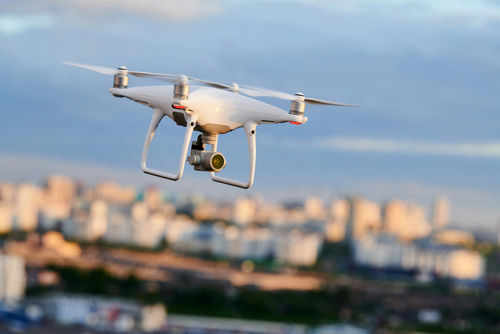
NASA just flew a human kidney by drone, and the test may open a new front in transplant logistics.
Quick Take
- UNOS, NASA Langley Research Center, and LifeNet Health completed a drone kidney transport study in Virginia on June 5, 2026.
- The kidneys were research organs, not transplant organs, which limits how far the result can go today.
- Researchers monitored temperature, pressure, and altitude during about 15-minute flights, and preliminary checks found no negative effect on organ integrity.
- The partners say the next step is broader testing, including more real-world routes and stronger evidence.
What the test actually proved
The study showed that a drone can move human kidneys beyond visual line of sight under controlled conditions. According to the research summary, the team flew the kidneys in Virginia on June 5 and watched the organs during about 15-minute flights. Researchers biopsied the kidneys and placed them on preservation pumps before and after the flights. The early findings showed no evidence that the drone ride harmed the organs.[1][5]
That matters because organ transport is often slowed by traffic, distance, and tight timing. UNOS said the partnership was built to explore faster and more reliable ways to move organs, and NASA Langley Research Center was part of the work from the start.[6][12] The study also fits a larger medical drone trend: drones can cut travel time, but real clinical use still depends on safety proof, regulatory approval, and better logistics data.[16][17]
Why conservatives should pay attention
This kind of project has a simple appeal: use smart technology to save lives without adding more bureaucracy. A drone can take a direct route, avoid road delays, and handle short-range transport that ground crews may struggle to time perfectly. That is the promise here. If the government can clear a path for life-saving tools, patients and families may benefit. If it bogs the process down, the system keeps wasting time when minutes matter.[18][19]
The same facts also show why caution still matters. The kidneys in this test were not viable for transplantation, so the trial did not yet prove that a drone can safely carry an organ meant for a waiting patient.[3][7] The flights were short, at about 7.5 miles, and the results were described as preliminary rather than peer reviewed.[4][5] That means the study is important, but it is not the final word on national transplant use.
What comes next for drone organ transport
The partners say future work will move beyond a narrow demonstration. UNOS said the next phase could include transporting research organs between hospitals and airports, while NASA materials point to future work on operational feasibility and scalability.[4][6][12] That is the real test. A short flight in controlled airspace is one thing. A reliable system that can work in real hospital chains, across longer routes, is something else entirely.
For now, the big takeaway is clear. The test suggests drone transport may help protect organ quality during short hauls, and that is a meaningful step forward.[1][5] But the study still leaves open the hard questions that matter most to patients: Can the system work with transplant-qualified organs, on longer routes, under full medical oversight, and with rules that allow it to scale? Until then, this is a promising trial, not a finished solution.
Sources:
[1] Web – NASA Just Flew a Human Kidney, and Transplant Medicine May Never Look …
[3] Web – LifeNet Health, NASA, and UNOS Complete First-of-Its-Kind Drone …
[4] Web – LifeNet Health, NASA, and UNOS Complete First-of-Its-Kind Drone …
[5] Web – NASA Completes First BVLOS Drone Transport of Human Kidney
[6] Web – BVLOS Drone Flights Major Organ Transport Study – DRONELIFE
[7] Web – UNOS partners with NASA to study transporting organs by drone
[12] Web – Drone‐Assisted Organ Transport: A Scoping Review of Clinical …
[16] Web – A milestone for medical innovation! NASA Langley and the United …
[17] Web – A drone at NASA Langley Research Center in Hampton is helping …
[18] Web – An empirical study of drone medical logistics transportation in a …
[19] Web – Study on medical professionals’ acceptance of and factors … – …