

Trump’s promise to use “all lawful means” at the border is colliding with a new question conservatives shouldn’t ignore: what happens when enforcement speed starts outrunning due process.
Quick Take
- ICE ramped up arrests and deportations fast after the 2025 transition, but early data showed many arrestees lacked criminal convictions.
- The administration expanded enforcement tools, including wider expedited removal and more cooperation agreements with local law enforcement.
- Reports highlight disputes over administrative warrants, access to hearings, and the use of older authorities like the Alien Enemies Act.
- Detention capacity surged beyond prior baselines, alongside allegations of reduced oversight and accountability.
Arrest surges put “criminal-first” messaging under scrutiny
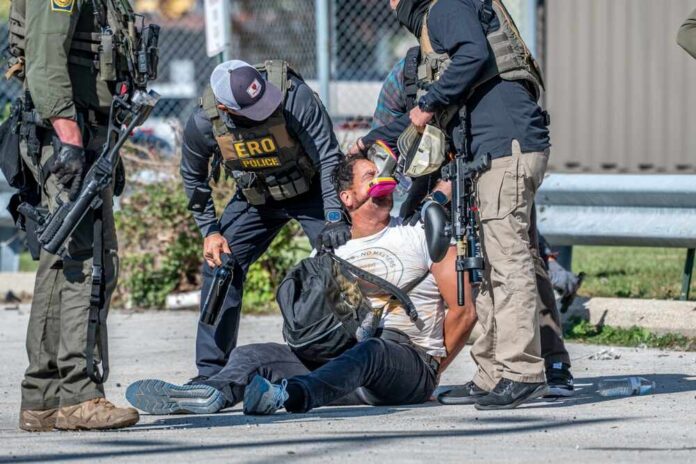
Federal immigration enforcement accelerated soon after President Trump returned to office in January 2025, with ICE reporting thousands of arrests in the first two weeks. ProPublica reported about 8,200 arrests from January 20 through February 2, and said less than half involved people with criminal convictions. That gap matters because officials publicly emphasized prioritizing criminals first, even as operational numbers suggested a broader net.
Capacity limits also shape what “mass deportation” can realistically mean. The Migration Policy Institute assessed the administration as tracking toward roughly half a million removals in the first year, which—while a major enforcement effort—faces practical constraints in staffing, detention space, and transportation. The same research pointed to the Biden-era enforcement baseline, including 685,000 deportations in fiscal year 2024, underscoring how both policy and capacity drive outcomes.
Expedited removal and administrative warrants raise constitutional stakes
Several sources described a broader use of expedited removal procedures inside the U.S. interior rather than limiting them to the border context. Critics argue that expanding expedited removal can bypass immigration judges and compress the time people have to present claims or seek counsel, elevating due-process concerns. Supporters of tougher enforcement often back swift removal for illegal entrants, but constitutional protections still matter when government power is applied broadly.
Disputes also center on what qualifies as “lawful” during arrests. Advocacy and research groups contend that revocations of temporary protections can occur with limited notice, leaving some people vulnerable to sudden detention despite prior government-issued permissions. Separately, the administration’s defenders have argued the public supports enforcement and that administrative warrants are being mischaracterized. The public-facing tension is clear: speed and scale versus transparency, notice, and judicial review.
Programs reversed: parole and TPS changes widen who is at risk
The research indicates the administration moved to unwind multiple Biden-era humanitarian pathways. WOLA reported that humanitarian parole programs for citizens of Cuba, Haiti, Nicaragua, and Venezuela brought in more than 531,690 people with two-year parole status under the prior administration, and later reporting described revocations affecting large numbers of beneficiaries. The American Immigration Council also reported TPS cancellations approaching 1 million people, shifting many from “allowed to be here” into a more precarious legal posture.
Those reversals are politically potent because they highlight a core conservative argument: parole and temporary programs can become de facto amnesty when used at scale. At the same time, pulling the rug out from people who followed government processes—whatever one thinks of those processes—creates litigation risk and fuels claims of arbitrary enforcement. Where courts draw the line will influence how durable future border policies become.
Detention expansion and oversight questions complicate the crackdown
AFSC reported daily detention populations exceeding 60,000, including the use of makeshift camps, former military bases, private prisons, and federal facilities. That same source alleged oversight offices were shut down, reducing accountability, and cited at least 32 deaths in ICE custody in the first year. Those claims, if accurate, are a warning sign for conservatives who want firm enforcement but also expect competent, humane administration and clear chain-of-command responsibility.
Another major shift is local-federal cooperation. The Migration Policy Institute described 287(g) agreements tripling from 135 to 456 since January 2025, with additional applications pending. That expansion can help communities frustrated by illegal immigration and fentanyl-era border failures, but it also increases the number of agencies involved—raising the stakes for consistent training, clear rules, and lawful arrest standards that can withstand courtroom challenges.
Conservatives can support restoring border control while still insisting the federal government stay inside constitutional guardrails. The research summarized here shows real enforcement acceleration—deportations in the hundreds of thousands, broader raids, and more local partnerships—paired with contested tactics and active court fights. If the administration wants results that last beyond the next news cycle, its strongest position is pairing enforcement with clean process: clear warrants, documented notice, and compliance with court orders.
Sources:
Trumps executive orders and Latin America: key things to know
Trumps executive orders immigration explained
Donald Trump immigration executive orders
Trump 2 immigration first 100 days
Mass deportation Trump democracy
Protecting the American people against invasion