

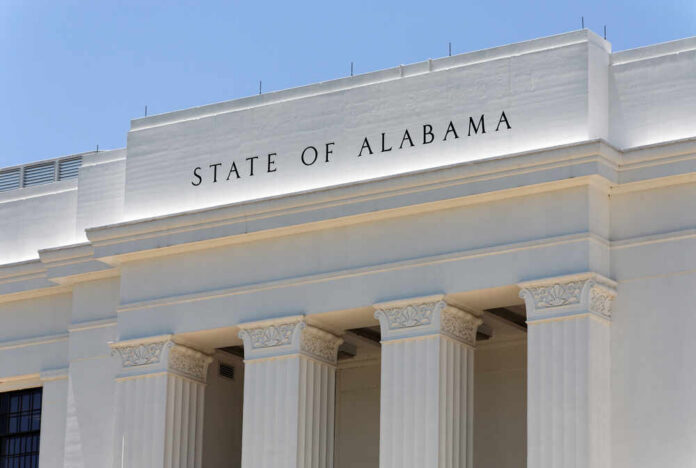
As activists and liberal commentators scream that the Supreme Court has “invented a right to discriminate,” the real fight in Alabama is over whether federal judges can force racial engineering of elections in defiance of both the Constitution and common sense.
Story Snapshot
- Federal judges in Alabama repeatedly struck down Republican-drawn maps as “intentionally discriminatory,” demanding additional majority-Black districts.
- The Supreme Court has now allowed Alabama to use its 2023 congressional map with one majority-Black district while legal challenges continue.[1]
- Civil-rights groups and left-leaning outlets claim the ruling “greenlights” racial gerrymandering and guts the Voting Rights Act.[1]
- Alabama’s attorney general says the decision restores state authority and rejects race-based quotas that go beyond what federal law requires.[3]
How Alabama’s Map Ended Up Back at the Supreme Court
After the 2020 census, Alabama’s legislature drew a seven-seat congressional map with one majority-Black district, roughly mirroring the long-standing political geography of the state.[3] Liberal groups sued, arguing that Black voters, who make up about 27 percent of the population, were entitled to two districts where they would likely elect their preferred candidate. In 2023, a three-judge federal panel agreed and found the state’s map likely violated Section 2 of the Voting Rights Act and the Fourteenth Amendment.
That 2023 panel concluded the legislature had intentionally diluted Black voting strength and ordered Alabama to create an additional majority-Black district. The Supreme Court later ruled in Allen v. Milligan that the original 2021 map likely violated the Voting Rights Act, forcing the state to use a court-imposed map with two majority-Black districts in the 2024 elections.[1] That temporary map shifted one seat toward Democrats, energizing national left-wing groups that view the South’s district lines as the next battlefield for reclaiming House control.[1]
Lower Courts Demand Racial Outcomes, Supreme Court Says “Not So Fast”
In response to Allen v. Milligan, Alabama’s Republican legislature drew a new 2023 map with one clear majority-Black district and another district approaching, but not reaching, a Black majority. Civil-rights lawyers and national Democrat-aligned outfits immediately attacked the plan as defiant. The same three-judge panel again struck down the map, calling it unconstitutional and declaring the legislature knew that a plan without a second majority-Black district would dilute Black Alabamians’ ability to elect their preferred candidates.
The panel said lawmakers “intentionally enacted that very plan” and tried to reimpose a two-majority-Black-district configuration for future elections. Alabama appealed directly to the Supreme Court through the emergency docket, arguing that federal judges were effectively imposing racial quotas and demanding race be the predominant factor in drawing lines. On May 11, 2026, the Supreme Court issued an order in Allen v. Caster that lifted the lower-court injunction and allowed Alabama’s 2023 map to be used while the case is reconsidered under new legal standards shaped by the Court’s recent decision in Louisiana v. Callais.
Left Calls It “A License to Discriminate,” Alabama Calls It a Constitutional Course Correction
Progressive commentators erupted after the order, claiming the Court had “greenlit Alabama’s racial gerrymander” and made racial-vote-dilution claims nearly impossible to win.[1] Outlets like Democracy Docket and advocacy organizations such as the American Civil Liberties Union described the map as “intentionally discriminatory” and accused the Court’s conservative majority of dismantling the remaining protections of the Voting Rights Act.[1] Some commentators went even further, calling the Supreme Court “illegitimate” and alleging it now shows “boundless contempt for Black voters.”
The Supreme Court ruled in favor of Alabama, allowing the state to use a congressional district map that diminishes Black voting power. This decision, following the Court’s ruling in Louisiana v. Callais, effectively nullifies the Fifteenth Amendment’s prohibition on racial…
— Rich Meyer (@richmeyer) June 5, 2026
Alabama’s Attorney General offered a very different view, praising the ruling as a “momentous” affirmation that Section 2 of the Voting Rights Act and the Reconstruction Amendments do not require states to sort voters by race or guarantee a fixed number of minority districts.[3] His office highlighted that, even under the Court’s updated framework, intentional racial discrimination in voting remains unconstitutional, but race-based line-drawing is not mandated as a remedy in every case.[3] For conservatives, the decision signals that state legislatures still have room to draw maps based on traditional criteria—such as geography, communities of interest, and political competition—without being forced into perpetual racial balancing of every seat in Congress.
What This Fight Really Means for Conservatives Nationwide
The Alabama order sits at the intersection of election integrity, state sovereignty, and the long-running battle over how far federal courts can go in micromanaging political outcomes. According to coverage of the case, the Court’s recent decisions, including Louisiana v. Callais, preserve a narrow path for challenging maps that are proven to be explicitly racist while rejecting the broader theory that every statistical disparity must be corrected by engineering more minority-majority districts.[1] That shift directly pushes back against decades of litigation aimed at using the Voting Rights Act to lock in permanent Democrat-leaning seats across the South.
For Trump-supporting readers, the implications extend far beyond Alabama. If the left’s framing prevails, every Republican-drawn map that does not maximize minority-majority districts will be branded “discriminatory,” weaponizing the courts to claw back power they cannot win on policy.[1] If the Supreme Court’s current approach holds, states retain primary control over their own district lines, and race returns to being one consideration among many instead of the overriding command. The Alabama decision does not “invent a right to discriminate”; it reins in an activist theory that would keep America permanently divided by race at the ballot box, and that is precisely why the left is so furious.[3]
Sources:
[1] Web – The Supreme Court Has Invented a Right to Discriminate
[3] Web – Supreme Court Reinstates Racially Discriminatory Map for … – ACLU