
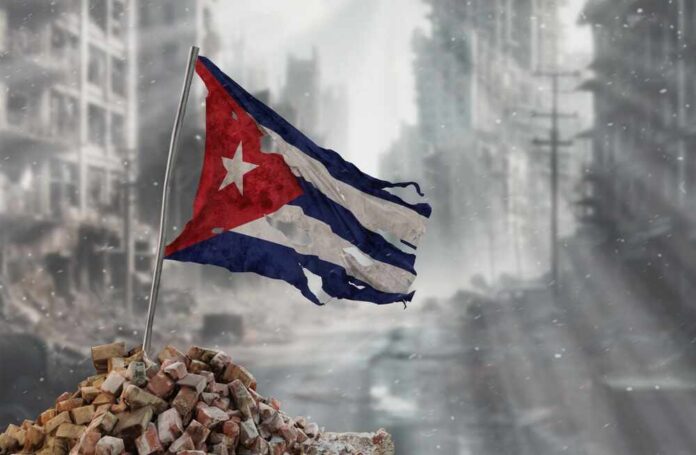
Whispers of a “secret” Cuba invasion plan are spreading fast—but the record shows more Cuban alarm and foreign posturing than confirmed U.S. war orders, and that distinction matters.
Story Snapshot
- Cuban authorities urged civilians to ready for a hypothetical U.S. attack and aired militia training, fueling invasion rumors [1].
- Reporting states the Trump administration has not said it is planning military operations in Cuba [1].
- Foreign voices warned of a “bloodbath,” raising the temperature without proving intent from Washington [4].
- Past U.S.–Cuba crises show ambiguous signals often morph into “invasion” headlines long before decisions are made [6].
Cuban Mobilization Claims And What They Actually Prove
Cuban state messaging urged families to prepare for a hypothetical U.S. attack and highlighted civilian military training rooted in the “war of the entire population” doctrine, a move that set off fresh invasion chatter across media outlets [1]. That public push shows Havana’s effort to harden internal resolve and manage shortages by rallying against an external foe. It does not, on its face, prove a United States invasion plan, a point conservatives should weigh carefully when separating psychological operations from policy reality.
Reporting republished from CNN noted that the Trump administration had not said it was planning any military operations in Cuba, a clear on-the-record constraint that undercuts claims of imminent action [1]. That statement is significant because it distinguishes routine contingency readiness from a decision to use force. Every administration keeps options on the shelf; public confirmation is the threshold that typically signals a policy move, and that threshold has not been crossed in the supplied record.
Foreign Warnings, Sanctions Headlines, And Escalation Optics
International and regional outlets amplified dire warnings from Cuban officials about a “bloodbath” if the United States attacked, rhetoric designed to raise the perceived costs of intervention and to galvanize sympathizers abroad [4]. Such language is coercive signaling, not evidence of U.S. orders. Parallel coverage referenced stepped-up pressure measures, including sanctions discussions, which are common tools for pushing authoritarian regimes without crossing into war. Conservatives should read these as layered pressure, not proof of a landing force.
The broader pattern matches decades of Cuba crisis playbooks: hints of force posture, legal and economic pressure, and intelligence focus create a fog where speculation thrives [6]. Media cycles then spin ambiguity into invasion narratives that travel faster than confirmations. For readers tired of breathless headlines, the key test remains whether the United States publicly signals rules of engagement, timelines, or specific operational objectives. None of those elements appear in the record presented.
How Conservatives Should Gauge Risk And Policy Discipline
Responsible strength means keeping options open while resisting mission creep driven by hype. Deterring malign activity from Havana and its partners, protecting American sovereignty, and defending the Constitution can coexist with a disciplined refusal to stumble into open-ended regime change. Based on the current reporting, Washington’s position looks like pressure and preparedness, not a green light for invasion—a distinction that protects U.S. troops, taxpayers, and strategic focus while still confronting hostile behavior from Cuba’s leadership [1][6].
Voters should demand clarity on objectives and authorities before endorsing any escalation: what U.S. interests are at stake, what end state is sought, how Congress is engaged, and how risks of Russian or regional entanglement are managed. Until those answers are publicly articulated, the prudent conservative stance supports targeted sanctions, intelligence pressure, and maritime security while rejecting rumor-driven calls for a rapid strike. Strength with restraint preserves deterrence, avoids distractive adventurism, and keeps faith with America’s servicemembers and taxpayers [1][4][6].
Sources:
[1] Web – Inside secret plan for Cuba invasion with armada, 2,500 marines, …
[4] YouTube – Trump Cuba Invasion On Cards? USS Nimitz On Standby …
[6] Web – Cuban Foreign Minister warns US invasion would trigger ‘bloodbath’