
A federal grand jury has indicted the Southern Poverty Law Center on charges of secretly funneling over $3 million to the very hate groups it publicly vowed to destroy, exposing what prosecutors call a massive fraud operation that betrayed donors for nearly a decade.
Story Snapshot
- SPLC faces 11 federal counts including wire fraud and money laundering for allegedly paying extremist group leaders between 2014 and 2023
- DOJ claims the organization used fictitious bank accounts to disguise $3 million in payments to Ku Klux Klan, Aryan Nations, and other hate groups
- Acting Attorney General Todd Blanche accuses SPLC of “manufacturing racism to justify its existence” while deceiving donors nationwide
- Two civil forfeiture actions filed to recover fraud proceeds as FBI warns investigation remains ongoing against all individuals involved
Federal Prosecutors Unveil Fraud Allegations
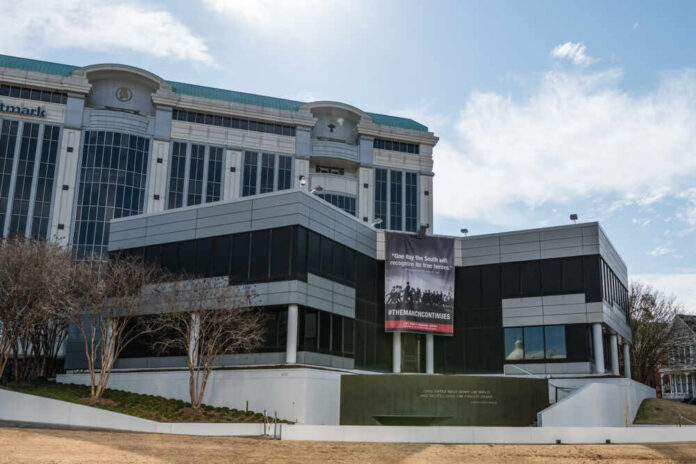
The U.S. Department of Justice charged the Southern Poverty Law Center in Montgomery, Alabama, with operating what Acting Attorney General Todd Blanche described as a scheme to manufacture racism while enriching the organization. The 11-count indictment alleges wire fraud, false statements to federally insured banks, and conspiracy to commit concealment money laundering. Prosecutors claim the civil rights nonprofit secretly transferred donated funds to leaders and organizers of violent extremist organizations including the Ku Klux Klan, United Klans of America, National Alliance, National Socialist Movement, Aryan Nations-affiliated Sadistic Souls Motorcycle Club, National Socialist Party of America, and American Front. The charges stem from a joint FBI and IRS Criminal Investigation probe.
Alleged Deception Spanned Nearly Four Decades
According to the indictment, the SPLC began operating a covert network of individuals associated with or infiltrating violent extremist groups during the 1980s. Between 2014 and 2023, the organization allegedly concealed more than $3 million in payments to these groups while simultaneously soliciting donations from Americans who believed their contributions supported anti-extremism efforts. FBI Director Kash Patel stated the SPLC lied to donors nationwide and facilitated state and federal crimes through these payments. The scheme allegedly involved creating fictitious entities and providing false statements to banks to disguise the flow of money to hate group figures the organization publicly condemned.
Government Officials Condemn Nonprofit Betrayal
Acting U.S. Attorney Kevin Davidson emphasized how the alleged deception undermines public trust in charitable organizations. Blanche vowed to hold accountable fraudulent organizations operating with deceptive playbooks, signaling broader scrutiny of nonprofits that may not align with the current administration’s priorities. The DOJ’s language frames the case as exposing hypocrisy at an institution that built its reputation fighting racism. For Americans who donated to support civil rights work, the allegations represent a profound betrayal—their money allegedly funded the very movements they opposed. This raises fundamental questions about accountability in the nonprofit sector, particularly for organizations wielding significant influence over public discourse on extremism.
Forfeiture Actions and Ongoing Investigation
The U.S. Attorney’s Office filed two separate civil forfeiture complaints seeking recovery of proceeds from the alleged fraud scheme. The FBI characterized its investigation as ongoing against all individuals involved, suggesting additional charges may follow. The SPLC, founded in 1971 and headquartered in Montgomery, faces potential asset seizures that could cripple operations. Short-term consequences include donor flight and operational paralysis; long-term implications could mean dissolution of an organization that shaped hate group monitoring for decades. The case arrives amid heightened political tensions, with critics framing the prosecution as targeting ideological opponents while supporters view it as necessary accountability for alleged criminal conduct.
Broader Implications for Civil Rights Organizations
The indictment sends shockwaves through the nonprofit sector, particularly organizations engaged in informant operations or intelligence-gathering. Alliance for Justice called the case a dangerous attack on nonprofits, framing it as politically motivated rather than legally justified. Yet the allegations, if proven, expose a troubling model where an organization profits by sustaining the very threats it claims to combat. For ordinary Americans frustrated with elites manipulating systems for personal gain, this case reinforces suspicions that powerful institutions prioritize self-preservation over public service. The specter of a prominent civil rights group allegedly enriching itself while deceiving donors epitomizes the corruption many believe infects organizations across the political spectrum.
Sources:
DOJ Southern Poverty Law Center Indictment a Dangerous New Attack on Nonprofits