

Hamas-linked activist and fundraising networks have a long history in the United States, and the latest Treasury allegations show why that history still matters.
Quick Take
- Federal and academic sources describe Hamas as a designated terrorist organization with durable structure, external support, and long-running political and military capacity.
- George Washington University documents historical Hamas-supporting networks in America, including public-facing organizations used for propaganda and fundraising.
- The supplied record does not prove the Global Sumud Flotilla itself is a Hamas front group, but Treasury says one steering-committee member is tied to a Hamas-funded Palestinian network.
- Critics say the public evidence still stops short of entity-level proof, leaving the dispute dependent on documents, bank records, and internal communications.
What Treasury Says About the Flotilla
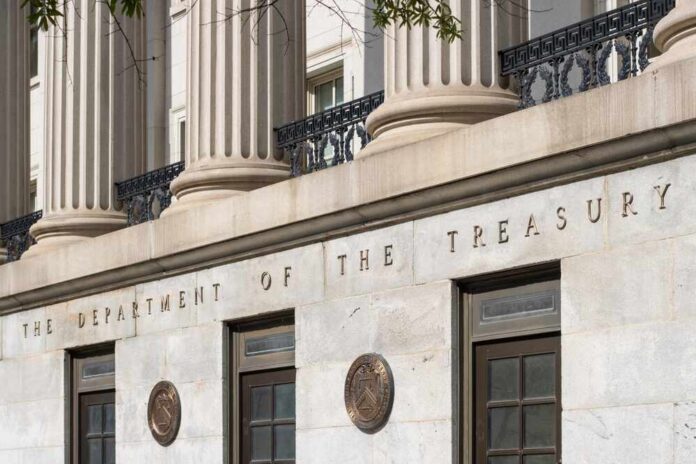
The Treasury Department says the Palestine Conference for Palestinians Abroad was established with Hamas funding and that Hamas directs its activity through placed officials, including figures tied to the Global Sumud Flotilla’s steering committee. That is the most concrete allegation in the supplied record, and it goes beyond general suspicion by naming an alleged organizational pathway. For readers who want hard evidence, the question now is whether the flotilla’s organizers can produce records that break that chain.
The public-facing flotilla materials present the effort as humanitarian and grassroots, while outside researchers and government officials argue that activist coalitions can hide deeper networks behind charitable language. That tension is the heart of the dispute. Hamas has been described by the National Counterterrorism Center as the largest and most capable militant group in the Gaza Strip and West Bank, with enduring organizational capacity after the October 7 attack and the cease-fire that followed.[1] If a civil-society campaign is operating near that orbit, conservatives should expect scrutiny rather than slogans.
Why the Historical Record Raises Alarm
George Washington University’s history of Hamas networks in America says internal Hamas documents and Federal Bureau of Investigation wiretaps showed a nationwide support structure that used public organizations to disseminate propaganda and raise money.[1] That history is important because it shows how support ecosystems can operate through ordinary-sounding nonprofits and activist groups. It does not, by itself, prove the same pattern exists in the current flotilla coalition, but it explains why many observers are not willing to give activist branding the benefit of the doubt.
Mainstream security analysis also places Hamas inside a broader regional web rather than treating it as an isolated local faction.[3] The Council on Foreign Relations describes Hamas as one component of Iran’s so-called axis of resistance, alongside Hezbollah, the Houthis, and militias in Iraq and Syria.[3] That context matters because any organization that claims to operate in the same political space can become a vehicle for influence, even when its public messaging stays carefully sanitized. The burden should be on organizers to show clean separation, not on taxpayers to assume it.
What the Evidence Does Not Prove
The supplied materials do not include charter documents, bank records, donor ledgers, authenticated internal communications, or court findings directly tying the flotilla organizations themselves to Hamas command or financing.[1][3][7] That limitation matters. Historical examples show how front structures can be built, but they do not eliminate the need for entity-specific proof in the present case. A careful reader should separate confirmed Hamas history from unproven claims about this particular coalition.
That distinction also explains why the strongest counterargument remains narrow rather than sweeping.[1][2][4][7] The public record supports concerns about Hamas-linked networks, and it supports caution about activist organizations that operate in politically charged space. It does not yet establish, on the materials provided here alone, that every member or backer of the Global Sumud Flotilla is part of a Hamas-controlled structure. For now, the real question is whether investigators will force the documents into the open.
What Would Settle the Question
The fastest way to resolve the dispute is through records, not rhetoric. Investigators would need charter documents, fiscal-sponsor agreements, bank statements, donor ledgers, email archives, and meeting records for the organizing entities. Forensic review should also compare organizers against prior Hamas-supporting network files and charity-case exhibits, because continuity claims live or die on overlapping names, addresses, and funding channels.[1] Without that paper trail, both supporters and critics are left arguing over inference instead of proof.
The Treasury allegation has already raised the political stakes, because sanctions and public designations can shape how banks, insurers, platforms, and media outlets respond. That is exactly why conservatives should insist on documentary clarity before accepting any activist coalition at face value. If the flotilla is clean, the organizers should welcome an audit. If it is not, the public deserves to know who is financing it and why so many of these supposedly humanitarian fronts keep orbiting the same terrorist ecosystem.
The Hamas Global Front Group: There’s a Chapter Near You
READ: https://t.co/lgF7ilgkXx pic.twitter.com/4YLbNe8pb6
— The Gateway Pundit (@gatewaypundit) May 27, 2026
Sources:
[1] Web – The Hamas Global Front Group: There’s a Chapter Near You
[2] Web – [PDF] The Hamas Networks in America: A Short History
[3] Web – Hamas – National Counterterrorism Center | Terrorist Groups
[4] Web – What Is Hamas? | Council on Foreign Relations