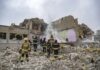

A growing number of Palestinian families in Jerusalem are being pressured to destroy their own homes—an enforcement tactic that shifts the cost and trauma onto ordinary people while authorities keep the upper hand.
Quick Take
- Israeli authorities ordered a Jerusalem family in Jabal al-Mukabber to self-demolish their home to avoid steep fines, fees, and potential arrest.
- Similar self-demolitions were reported in Silwan, underscoring a pattern tied to permit enforcement in East Jerusalem.
- Human-rights monitors cite extremely low permit-approval rates for Palestinians, raising questions about whether “legal compliance” is realistically attainable.
- The dispute highlights a broader problem voters across the West increasingly recognize: power systems can enforce rules in ways that punish the weak and protect the connected.
Self-Demolition in Jabal al-Mukabber Shows How Enforcement Can Become Coercion
Israeli authorities compelled Ali Sawahreh and his son Mohammad to demolish their own home in Jabal al-Mukabber, southeast of East Jerusalem, according to local reporting. The family faced threats of heavy financial penalties, demolition fees, and possible arrest or prosecution if they did not comply. The key detail is not just that a structure came down, but that the owners were pushed to do the work themselves, absorbing costs and emotional fallout while avoiding harsher state action.
Reports described other cases the same weekend in Silwan, south of the Al-Aqsa Mosque compound, where multiple Palestinians were also forced into self-demolition. That clustering matters because it suggests an enforcement tempo rather than an isolated dispute over one building. Israeli officials generally frame these actions as planning and building-code enforcement. Critics argue the pressure to self-demolish is itself a tool of control—because it turns “compliance” into a choice between ruinous penalties and personal destruction.
Permits, Planning Rules, and the Reality of “Legal” Housing
The central policy dispute revolves around permits. Research cited by advocacy groups and monitors indicates Palestinian permit requests in the relevant territories are approved at very low rates—around 1% during a recent multi-year period referenced in the provided material. If that figure is accurate, it reshapes the conversation from “why didn’t they apply” to “could they realistically succeed.” A system can be formally rule-based yet functionally restrictive when approvals are rare and enforcement is aggressive.
Historical data assembled in the background material points to a long-running pattern since Israel’s 1967 control of East Jerusalem, including large-scale demolitions and displacement over decades. One frequently cited tally claims tens of thousands of Palestinian structures have been demolished across areas under Israeli control since 1967, with a significant number in East Jerusalem between 2004 and 2020. Numbers like these are contested politically, but they align across multiple sources on one point: demolition and displacement are recurring features, not exceptions.
Why This Story Resonates Beyond the Middle East Debate
American readers tend to split sharply on Israel and the Palestinians, but the mechanism at the heart of this story is easier to recognize: an authority controls permits, enforcement, and penalties, while ordinary families carry the consequences. That dynamic resembles what many U.S. voters—right, left, and center—complain about at home when agencies write complex rules, approve exceptions for the well-connected, and then come down hard on those without political leverage or expensive lawyers. The anger is often about power, not geography.
Conflicting Claims: Security and Law Versus Discrimination and Displacement
Israeli authorities defend demolitions as legitimate enforcement of planning laws, and in other contexts Israel has argued some demolitions relate to security concerns. Human-rights organizations and international bodies cited in the provided research counter that certain practices amount to unlawful collective punishment or discriminatory policy, particularly when families are penalized for acts they did not commit or when permits are effectively unattainable. The research provided does not resolve these disputes, but it documents the competing frameworks clearly.
What to Watch Next in Jerusalem and the Wider West Bank Pattern
The provided research also points to intensified demolition activity in parts of the West Bank beginning in early 2026, alongside continued enforcement in Jerusalem neighborhoods. That matters because pressure in one area can drive displacement into another, increasing instability and deepening grievances. For U.S. policymakers, the practical question is whether diplomatic engagement focuses on process—permits, courts, and enforcement standards—or only on rhetoric. Without measurable changes in approvals and enforcement, self-demolition will likely remain a recurring headline.
Sources:
Palestinian Family Forced To Demolish Its Home in Jerusalem
Jerusalem self-demolition: Palestinian families forced to knock down their own homes