

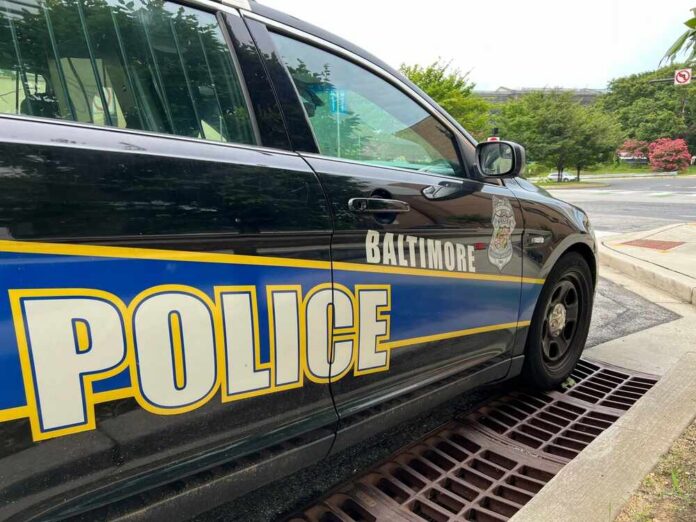
Crime that once stayed inside Baltimore City limits is now showing up in the suburbs—and residents in places like Towson are being told to get used to it.
Quick Take
- A retired Baltimore County police sergeant says conditions in key suburban hotspots are “exponentially deteriorating,” blaming repeat youth offenders and weak accountability.
- Maryland’s juvenile and bail reforms aimed at reducing detention have collided with persistent recidivism concerns and rising suburban disorder incidents.
- Business confidence is taking hits, with the Apple Store at Towson Town Center closing after citing “declining conditions,” though local business leaders dispute crime as the only factor.
- Maryland’s broader problems—population decline and a swing from surplus to deficit—are fueling a political narrative that one-party rule is failing basic governance.
Retired Sgt. Warns Towson Is Becoming an “Easy Access” Target
Mickey Hoppert, a retired Baltimore County Police sergeant, drew new attention this month after warning that public safety in parts of Baltimore County is “exponentially deteriorating.” In interviews amplified by local media and online sharing, Hoppert argued that “pockets of bad elements” are exploiting transportation links and weak juvenile consequences to move disorder outward from Baltimore City. His core point is simple: when accountability collapses in the city, the suburbs inherit the fallout.
Baltimore County is not Baltimore City, but it is not immune to regional patterns. The research summary cites FBI UCR trends indicating a notable rise in county violent crime between 2019 and 2024, and it notes the county police dashboard showing an increase year-to-date in 2026. Those numbers do not prove an “exponential” surge, but they do support the idea that suburban residents are experiencing more incidents than they were a few years ago—especially around shopping centers and transit-adjacent areas.
Juvenile Justice Reforms Meet Repeat-Offender Reality
Maryland’s reforms over the past several years were designed to reduce incarceration and keep more young offenders out of detention, including raising the age for juvenile charging and limiting pretrial detention in many cases. Supporters argue those changes advance fairness and reduce long-term harm to youth. Critics counter that the practical effect is fewer immediate consequences for conduct that disrupts public spaces, leaving police to cycle the same offenders through a system that struggles to deter repeat behavior.
The research report highlights a tension that neither party has fully resolved: reform goals versus public-order outcomes. It cites a juvenile rearrest rate often referenced in debates and notes that Baltimore City’s homicide totals fell in 2025 compared with 2023, even while residents and businesses remain alarmed. That mixed picture matters because it limits sweeping claims. It also sharpens the question suburban voters increasingly ask—if violent crime metrics improve in one place, why do daily quality-of-life incidents feel worse in another?
Retail Pullback and “Declining Conditions” Raise Stakes for Taxpayers
Economic signals can make crime debates harder to ignore. The closure of the Apple Store at Towson Town Center in April 2026 became a symbol for residents who believe disorder is driving companies away. Reporting referenced in the research notes that the closure cited “declining conditions,” while business groups questioned whether crime alone explains the decision. Even with that caveat, recurring burglaries and large youth “meetups” create costs that ultimately land on employees, shoppers, and taxpayers through security spending and higher insurance.
One-Party Rule, Fiscal Whiplash, and Public Trust
The story is also political because Maryland’s Democratic supermajorities dominate the policy pipeline. The research ties rising public frustration to broader state trends: population decline, net out-migration, and a swing from a large surplus early in Gov. Wes Moore’s term to a multibillion-dollar deficit projection. Those facts do not prove crime is the sole driver, but they do reinforce a broader, bipartisan suspicion that government is failing at core functions—safe streets, basic competence, and responsible budgeting.
For conservatives, the takeaway is not a talking point about “blue states,” but a practical warning about what happens when ideological reforms outrun real-world enforcement capacity. For liberals, the tension is that reform without visible order can backfire politically, inviting tougher crackdowns and public backlash. Either way, suburban spillover changes the debate: once disorder hits family shopping centers and commuter hubs, voters demand results, not slogans—and they begin questioning whether entrenched leadership is protecting the public or protecting itself.
Sources:
Media’s Baltimore ‘Teen Purge’ Narrative Falling Apart