

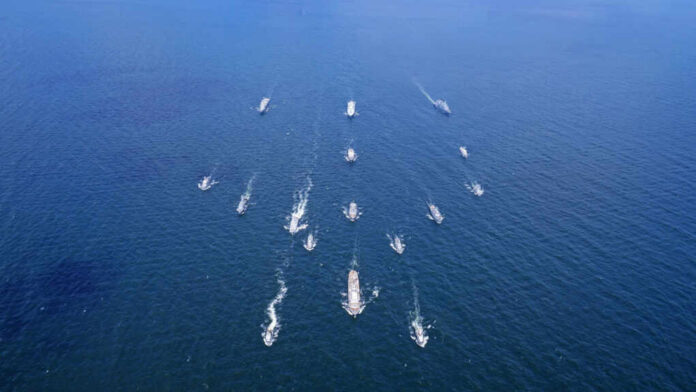
Britain is sending warships, jets, and mine-hunting drones into a chokepoint that still matters to energy prices, shipping insurance, and global security.
Quick Take
- The United Kingdom and France are co-hosting a multinational Strait of Hormuz mission with more than 40 nations represented at the ministerial level [5].
- Britain says the package is strictly defensive and includes autonomous mine-hunting systems, counter-drone technology, Typhoon jets, and HMS Dragon [1][5].
- The effort is tied to a future mission that will begin when conditions allow, not an immediate combat operation [5].
- Officials say the goal is to restore confidence for commercial shipping and protect freedom of navigation through a critical trade route [1].
Britain’s Defensive Buildout in the Strait
The United Kingdom says its contribution centers on autonomous mine-hunting equipment, counter-drone systems, Typhoon fighter jets, mine-clearance specialists, and HMS Dragon, a Type 45 destroyer already deploying toward the region [1][5]. Officials also said the mission will be coordinated with allies and backed by new funding for mine-hunting drones and counter-drone tools. That matters because the Strait of Hormuz remains one of the world’s most sensitive shipping lanes, where limited disruption can ripple through fuel markets and freight costs.
Britain’s announcement comes with a clear condition that should not be glossed over: the multinational mission is intended to become operational when conditions allow [5]. That wording leaves the deployment in a preparatory stage rather than an active escort regime. For readers tired of reckless foreign entanglements, the distinction matters. A defensive posture can help protect trade routes, but the public still deserves plain answers on command authority, rules of engagement, and how close these ships will come to a live conflict zone.
What London and Paris Say the Mission Is For
British and French officials describe the project as a strictly defensive effort meant to reopen and secure the Strait of Hormuz while restoring confidence among commercial shippers [5]. They say the mission is designed to support freedom of navigation, not to launch strikes. Reuters and other reporting also note that more than a dozen countries have offered capabilities, with planners discussing demining, escorting, and air policing roles [3]. That is a familiar model: limited force, broad coalition cover, and a narrow maritime objective.
Still, the public record shows some limits. The government statements released so far describe the mission in broad terms, but they do not publish a full mandate, detailed rules of engagement, or a complete list of every national contribution [5]. That gap is important because coalition branding can sound stronger than the operational reality. A mission that is still being assembled is not the same as a fully standing patrol force. Conservatives should notice that governments often speak in reassuring language before the real structure is even settled.
Why the Strait Still Drives Bigger Economic Fears
The Strait of Hormuz remains a strategic pressure point because a large share of the world’s oil passes through it, and even temporary disruption can hit markets far beyond the Middle East [1][5]. That is why the British government ties the mission to trade and economic security at home, not just regional military posture [5]. In plain terms, London is trying to protect the flow of commerce that keeps energy prices and shipping costs from surging again. That logic will resonate with Americans who remember inflation’s damage.
Britain to lead multinational mission to reopen the Strait of Hormuz https://t.co/jq5Reskj0V pic.twitter.com/uIRAcZhKxz
— bulletinindy (@bulletinindy) May 16, 2026
Critics have described the mission as symbolic, but the available official statements point to a practical purpose: escort support, mine clearance, air patrols, and deterrence against further interference [5]. At the same time, the mission’s future timing and the absence of a finished public mandate leave room for skepticism about how quickly it can deliver results. The best case is simple enough: keep the sea lane open, keep commercial ships moving, and avoid another round of costly disruption in a vital energy corridor.
Sources:
[1] Web – UK Leads 40-Nation Defensive Mission to Secure Strait of Hormuz
[3] Web – UK hosting countries for talks on Strait of Hormuz mission
[5] Web – UK and France set to host multinational Strait of Hormuz meeting as …