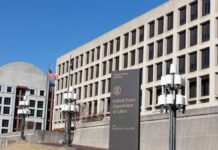

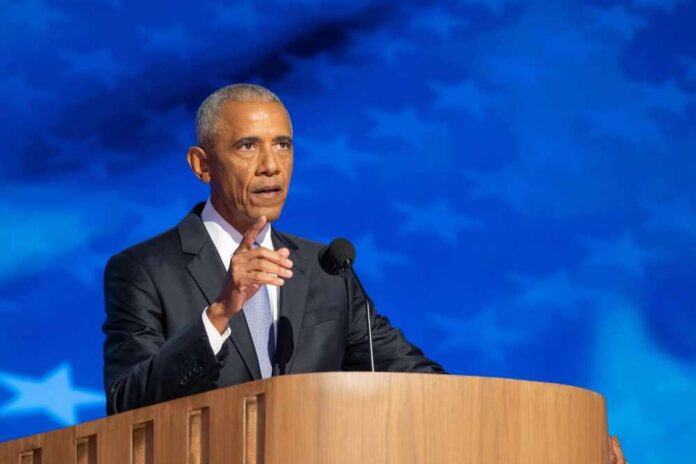
Former President Barack Obama warns that the Justice Department faces unprecedented politicization under the current administration, raising alarm bells about constitutional norms that have historically protected prosecutorial independence from presidential interference.
At a Glance
- Obama criticizes DOJ politicization, stating the attorney general must serve as “the people’s lawyer,” not the president’s personal legal representative
- Specific prosecutions of James Comey and Letitia James cited as examples of weaponized federal law enforcement targeting political adversaries
- Former president advocates for codifying informal norms into formal legal protections to prevent future executive abuse of prosecutorial power
- Interview aired May 6, 2026, during Colbert’s farewell tour, amplifying Democratic messaging about institutional erosion and executive overreach
The Attorney General’s Constitutional Role Under Siege
Obama articulated a fundamental constitutional principle during his CBS interview: the attorney general serves as an independent legal officer representing all Americans, not as the president’s personal counsel. He stated directly, “The attorney general is the people’s lawyer. It’s not the president’s consiglieri.” This distinction reflects a long-established norm separating presidential policy direction from case-specific prosecutorial decisions, a boundary Obama contends the current administration has crossed.
Targeting Political Opponents Through Federal Power
The former president pointed to concrete examples of prosecutorial decisions that concern constitutional scholars and institutional watchdogs. James Comey, former FBI director, and Letitia James, New York’s attorney general, have faced DOJ investigations and prosecutions. Obama characterized this pattern as an “awesome power of the state” being weaponized against perceived political enemies. He emphasized that no administration should “start using that to go after their political enemies or reward their friends,” yet argued this departure from established norms now defines current governance.
Informal Norms Prove Insufficient Protection
A critical insight emerges from Obama’s analysis: constitutional protections based on informal agreements and historical precedent lack enforceability when successive administrations abandon them. Obama stated the need for “basic work to return to this basic norm,” but more significantly, he advocated for codifying these protections into formal law. This recognition reflects a broader institutional vulnerability: norms-based constitutional systems depend on voluntary compliance, which cannot be guaranteed across political transitions.
Presidential Powers Require Democratic Safeguards
Obama expanded his institutional critique to presidential pardon power, expressing concern about abuse benefiting campaign contributors and business investors. He also raised concerns about military politicization, suggesting a pattern of executive branch agencies being redirected toward partisan objectives. These concerns resonate across the political spectrum, where citizens increasingly question whether institutional checks adequately constrain executive authority or whether formal legal restrictions have become necessary.
The Erosion of Institutional Independence
The interview highlights a fundamental tension in American governance: the Constitution relies heavily on informal norms and institutional traditions to maintain separation of powers. When political leaders abandon these conventions, formal legal protections become essential. Obama’s call for codification acknowledges this reality, suggesting that relying on the goodwill of future administrations represents an insufficient safeguard for prosecutorial independence and democratic accountability.
What Citizens Across the Political Spectrum Should Consider
Whether one agrees with Obama’s specific criticisms or not, his underlying concern merits serious consideration: unchecked prosecutorial power in any president’s hands threatens individual liberty and equal justice. Both conservatives and liberals have historically worried about government abuse of legal authority. The question transcends partisan loyalty: Do formal legal protections for DOJ independence serve the American people better than relying on presidential restraint and tradition?
Barack Obama Complains About ‘Politicization’ of DOJ — Then Encourages Stephen Colbert to Run For President! (VIDEO)
READ: https://t.co/bzemWxGNkU pic.twitter.com/GDWNqJdgPQ
— The Gateway Pundit (@gatewaypundit) May 7, 2026
Sources:
Obama tells Colbert he worries about ‘politicization of the criminal justice system’ – CBS News