
A half-billion-dollar government bailout collapses, leaving 17,000 workers jobless and millions of Americans wondering why taxpayer money nearly bailed out a failing airline while everyday travelers are left to fend for themselves.
Story Snapshot
- Spirit Airlines ceases all operations immediately on May 2, 2026, after 34 years, stranding thousands of passengers with no rebooking assistance
- $500 million Trump Administration bailout deal fails when bondholders block the agreement, forcing complete shutdown
- 17,000 employees lose jobs as airline winds down; travelers with third-party bookings must seek refunds through vendors, not the government reserve fund
- Aviation experts warn the capacity loss will drive airfares higher across the industry, hitting working-class families hardest amid fuel price spikes from Iran war
Bailout Collapse Triggers Immediate Shutdown
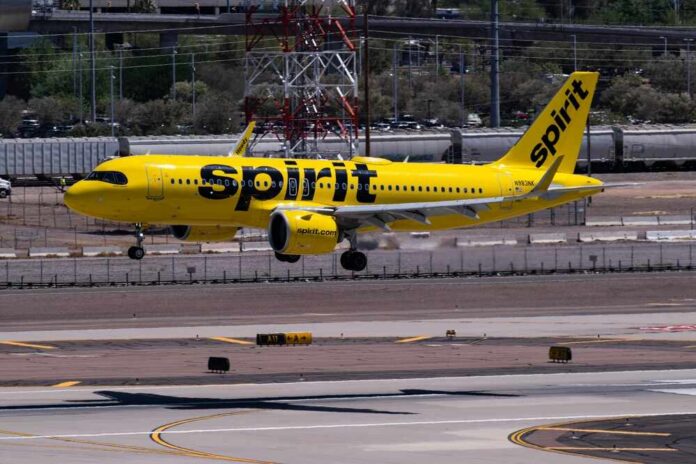
Spirit Airlines announced a complete cessation of operations at 3:00 a.m. ET on May 2, 2026, after negotiations for a $500 million government bailout with the Trump Administration fell apart. Two of three creditor groups supported the deal, but bondholders blocked the agreement, choosing liquidation over rescue. The ultralow-cost carrier, known for its bright yellow planes and no-frills service, operated its final flight from Detroit to Dallas Fort Worth just hours before the announcement. Transportation Secretary Sean Duffy warned travelers not to show up at airports, confirming all flights were canceled with no customer service available.
Government Refund Plan Leaves Many Behind
The Trump Administration established a U.S. Transportation reserve fund to process refunds, but only for passengers who booked directly with Spirit. Travelers who purchased tickets through third-party vendors must seek refunds from those companies, not the government. This creates a two-tiered system where some customers receive taxpayer-backed assistance while others are left to navigate private refund processes. Secretary Duffy’s announcement provided no rebooking help, leaving stranded passengers to scramble for alternative flights. Other airlines offered discounts to displaced Spirit customers, but the lack of coordinated federal support raises questions about who benefits from government intervention.
Working Families Pay the Price
Spirit pioneered the ultralow-cost model in the U.S., serving budget-conscious travelers who depended on deep discount fares to afford air travel. The airline’s shutdown eliminates hundreds of daily flights and removes critical capacity from routes serving working-class communities. CBS News travel editor Peter Greenberg warned that reduced capacity combined with steady demand and spiking fuel prices means “airfares have nowhere to go but up.” The 17,000 workers facing sudden unemployment and families losing access to affordable travel options bear the immediate cost, while the broader industry consolidates power and raises prices. This pattern—corporate failures hurting ordinary Americans while elites debate bailouts—reinforces why millions distrust government economic management.
Bankruptcies and Geopolitical Fallout
Spirit filed for Chapter 11 bankruptcy twice in under a year, first in November 2024 and again in August 2025, as cash shortages and operational strains mounted. The airline emerged from its first restructuring in March 2025 but couldn’t overcome rising jet fuel costs tied to the 2026 Iran war. By April 2026, reports warned liquidation was imminent. The company’s repeated failures reflect deeper issues: mismanagement, creditor conflicts, and external shocks like geopolitical fuel spikes that low-cost carriers struggle to absorb. Founded in 1980 and operating from West Palm Beach, Florida, Spirit disrupted the industry for decades, but its collapse highlights how government-created instability—whether through foreign policy choices driving fuel costs or inconsistent bailout decisions—compounds private sector vulnerabilities.
The Spirit Airlines shutdown exposes a familiar frustration: government officials talk about helping Americans but fail to prevent crises or deliver consistent relief. Nearly $500 million in taxpayer funds almost went to creditors and executives, not to workers or passengers. Whether the bailout would have truly stabilized the airline or merely delayed the inevitable remains unclear, but the optics are damaging. Hardworking people lose jobs and affordable travel options while Washington debates who deserves rescue. This episode underscores why distrust of the political class spans left and right—ordinary citizens see elites managing failures poorly while they shoulder the consequences.
Sources:
Spirit Airlines goes out of business after Trump bailout deal collapses – Audacy
Spirit Airlines shutting down: What it means for tickets and flights – CBS News
Airlines offer discounts after Spirit shutdown – Axios
Spirit Airlines liquidation concerns: What to know – The Points Guy
Is Spirit Airlines shutting down? What to know if you have tickets – 6ABC