
Bipartisan Pile-On Erupts Over AOC Clip
When a would-be Democratic frontrunner tried to sound “worldly” on the biggest foreign-policy stage in Europe, basic facts—and America’s credibility—became collateral damage.
Quick Take
- Rep. Alexandria Ocasio-Cortez drew bipartisan criticism after her Munich Security Conference remarks went viral for factual errors and muddled answers.
- AOC’s claim tying Venezuela to “below the equator” was quickly debunked because Venezuela sits in the Northern Hemisphere.
- Her response on whether the U.S. should defend Taiwan if China invades was criticized as unclear, including by a former CNN journalist.
- AOC used Munich to attack Trump administration foreign policy as “withdrawal,” while arguing for renewed international commitments and aid.
Munich Put AOC’s “2028 Readiness” Under a Harsh Spotlight
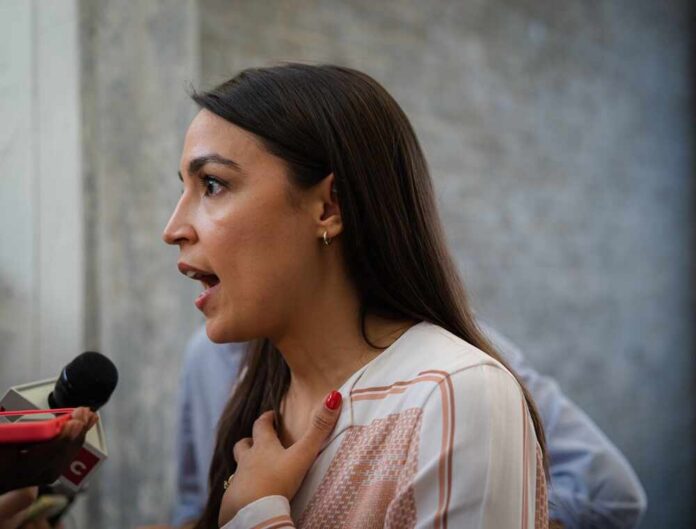
Rep. Alexandria Ocasio-Cortez appeared at the Munich Security Conference in Germany over February 14–16, 2026, aiming to project foreign-policy seriousness as she continues to be discussed as a future national contender. Instead, her remarks triggered a wave of criticism that did not stay confined to conservative media. The coverage emphasized a familiar problem for Democrats trying to sell “expertise”: when the details matter, sound bites get stress-tested in public.
Secretary of State Marco Rubio also spoke at Munich, offering a competing vision of U.S. foreign policy at the same venue. That contrast mattered, because Munich is where European elites gauge whether American leaders understand power, geography, alliances, and deterrence. For conservative voters weary of globalist moralizing and taxpayer-funded nation-building, the larger question is simpler: can elected officials speak clearly about U.S. interests without slipping into slogans or errors?
The Venezuela Geography Error Became the Defining Clip
AOC’s most clear-cut factual mistake centered on Venezuela. While discussing the country, she argued the U.S. should not “engage in acts of war just because the nation is below the equator.” Critics immediately pointed out Venezuela is not below the equator; it is located in the Northern Hemisphere. Multiple outlets treated the mistake as objectively verifiable and emblematic of the broader problem: if a lawmaker cannot get basic geography right, voters have reason to doubt the reliability of everything built on top of it.
The episode also shows how “vibes-based” foreign policy collapses when confronted by maps and timelines. Americans remember the last decade of elite misjudgments—endless wars, shifting narratives, and bureaucratic spin that never seems to face consequences. When a prominent member of Congress makes a simple, checkable error in front of international audiences, it reinforces the conservative case for humility and competence: leaders should prioritize facts, deterrence, and national interest over performative talking points.
Taiwan: A Key Deterrence Question Met with a Wordy Non-Answer
AOC also struggled when asked a direct question central to deterrence in the Indo-Pacific: should the United States commit to defending Taiwan if China invades? Her answer, as quoted in coverage, emphasized hopes to avoid reaching that point and referenced “economic research” and “global positions,” but critics described it as halting and unclear. Former CNN journalist Chris Cillizza publicly assessed the response as “not great,” signaling the criticism was not limited to right-leaning commentators.
That matters because Taiwan is not a seminar topic; it is a test of whether America can communicate resolve clearly enough to prevent war. Conservative voters who back peace through strength generally want less ambiguity from public officials when adversaries are watching. The available reporting does not show AOC committing to a clearer position after the conference, so the public record remains what was said in the moment—an answer that left both supporters and skeptics to interpret her intent.
More “Clangers” Fueled the Viral Cycle—and Party Anxiety
Beyond Venezuela and Taiwan, additional remarks attracted criticism. Reporting described AOC mistakenly referring to U.S. relations with Europe as the “Trans-Pacific Partnership” and included commentary about her accusing Israel of genocide in Gaza. She also mocked Rubio over his remarks connecting American cowboy culture to Spain, responding with a line implying others “would like to have a word.” Taken together, these moments created the kind of short clips that spread fast, harden narratives, and linger for years.
A Democratic strategist, Hank Sheinkopf, summed up the political damage in blunt terms, describing Munich as a “beauty pageant” to show international “chops,” and concluding she showed “a complete lack of chops.” The significance for 2026 politics is not just embarrassment. It is credibility: Democrats have spent years insisting their leaders represent the “serious” alternative to Trump-era governance. Munich handed critics evidence that résumé-building ambition can outrun actual command of the material.
Her Substantive Message: Attack Trump’s “Withdrawal,” Push International Commitments
On substance, AOC used the conference to criticize the Trump administration’s foreign policy, arguing it was trying to “withdraw the United States from the entire world” and warning that such retrenchment would enable authoritarianism. She also called for revisiting international aid commitments and criticized withdrawals from certain international compacts and USAID-related programs. In other words, the policy thrust leaned toward deeper institutional engagement abroad, even as the presentation drew fire.
For conservatives who watched inflation, overspending, and bureaucratic bloat accelerate under the previous administration, AOC’s emphasis on renewed commitments raises a basic accountability question: what exactly is the measurable benefit for American families? The provided research shows her focus on alliances and aid, but it does not include specific cost figures, oversight safeguards, or defined end-states. Without that, her argument reads more like a return to the open-ended global posture many voters rejected in recent elections.
Sources:
AOC on Foreign Policy and Trade Policy
Mocked in Munich, AOC was a much bigger success than her critics realize