
A sitting Democratic senator just said his own party is being led by “Trump Derangement Syndrome,” not by any real leader—and that admission is landing in the middle of a shutdown and a national-security fight.
Quick Take
- Sen. John Fetterman told the “All-In Podcast” Democrats lack leadership and are instead “governed by” anti-Trump fixation.
- Fetterman argued bipartisan agreement gets punished inside today’s Democratic coalition, pointing to blowback over Iran-related military action and DHS funding.
- His comments spotlight a widening Democratic split over Israel, immigration, and the ongoing government shutdown tied to DHS/ICE funding.
- Polling and party reactions suggest Fetterman’s independence plays better with Republicans and swing voters than with many Pennsylvania Democrats.
Fetterman’s “TDS” remark exposes a leadership vacuum
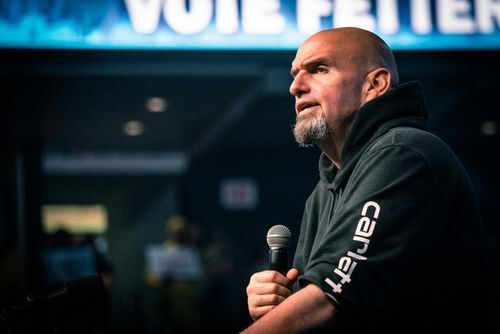
Sen. John Fetterman (D-PA) used unusually blunt language in a Wednesday appearance on the “All-In Podcast,” saying the Democratic Party has no true leader and is instead “governed by” “Trump Derangement Syndrome.” The phrase is typically used by Trump critics’ opponents to describe reflexive, irrational hostility toward President Donald Trump. Fetterman cast himself as an independent voice and warned that party incentives now reward opposition over governing.
Fetterman also described how internal pressure can follow Democrats who cooperate with Republicans or back security-focused policies. In the interview and related coverage, he cited backlash tied to his support for “Operation Epic Fury,” described in reporting as a U.S.-Israeli military action against Iran. He framed the dispute less as a single vote and more as a pattern: when Democrats agree with Trump-era priorities, he says, the party treats it as betrayal instead of problem-solving.
Shutdown politics put DHS and ICE at the center of the fight
Fetterman’s criticism is landing during a prolonged government shutdown tied to disputes over Department of Homeland Security funding and immigration enforcement. Reports describe the standoff as stretching beyond 40 days, with disruptions affecting federal workers and services, including unpaid Transportation Security Administration employees. While Republicans control Congress and the White House in Trump’s second term, Democrats retain leverage through procedural tactics and public messaging—often forcing brinkmanship rather than negotiated policy wins.
In TV appearances, Fetterman has argued that drawing out a shutdown to force changes to immigration enforcement is a losing strategy—politically and practically—because it harms frontline workers and leaves core security functions in limbo. That position places him at odds with Democratic voices demanding “ICE reforms” as a condition for reopening government. For conservatives who prioritize border security and basic continuity of government, his stance underscores a growing split inside the Democratic coalition about whether governance still matters.
Israel and Iran are driving a sharp Democratic identity clash
Fetterman’s break with party orthodoxy did not begin with one podcast line. Since the Oct. 7, 2023 Hamas attack on Israel, he has been among the Senate’s most vocal pro-Israel Democrats, at times emphasizing what he calls “moral clarity.” Coverage describes him challenging his party to choose between pro-Israel commitments and rising influence from pro-Palestinian activists and online personalities. That conflict has sharpened as the U.S. role in Iran-related hostilities became a live political issue.
On national security, Fetterman’s posture aligns more easily with traditional bipartisan hawkishness than with the Democratic Party’s newer anti-intervention instincts. That does not automatically prove his critics are wrong, but it does clarify what the dispute is really about: whether the party’s center of gravity is moving toward activist-driven purity tests. For voters exhausted by elite signaling and constant outrage cycles, the bigger question is whether either party can still prioritize deterrence, alliances, and domestic stability.
Polling and party backlash show the costs of “country over party”
Fetterman’s willingness to defy leadership appears to carry real political risk at home. Reporting cites a February 2026 Quinnipiac measure showing only 22% approval among Pennsylvania Democrats, fueling talk of a primary challenge and claims from intraparty critics that he is disloyal. At the same time, coverage indicates he performs better with Republicans and some independents, feeding recurring speculation about whether he could eventually switch parties—an idea he has publicly downplayed.
For conservatives and many politically homeless voters, the significance is less about Fetterman’s brand and more about institutional incentives. If a senator can be targeted for supporting Israel, border enforcement, or reopening government, the message to other lawmakers is clear: keep your head down, follow the base, and never validate the other side. That dynamic reinforces the shared left-right frustration that Washington’s first priority has become career preservation, not durable solutions.
What to watch next as parties harden into “tribes”
Fetterman’s “TDS” comment will not resolve the shutdown, nor will it settle the Israel-Iran debate. It does, however, highlight how political identity now often forms around who people hate rather than what they can build. Republicans will likely amplify his critique to show Democratic dysfunction, while Democrats may treat him as an outlier to be contained. The practical test will be whether Congress can fund DHS without symbolic hostage-taking—and whether either party rewards lawmakers for governing.
Sen. John Fetterman Just Said What Democrats Don’t Want to Hear About Themselveshttps://t.co/1hyiMBvSZc
— RedState (@RedState) May 8, 2026
If the shutdown continues, pressure will rise on both leadership teams: Republicans to prove unified control can still deliver basic governance, and Democrats to explain why forcing fights over ICE or security spending helps everyday families. Fetterman’s line about leadership may resonate because it points to something many Americans already feel. When politics becomes a permanent protest, the people who pay first are workers, travelers, and communities that depend on stable federal services.
Sources:
fetterman says ‘moral clarity’ drives widening break in Democratic Party
Fetterman: Democrats ‘not the popular guy’