

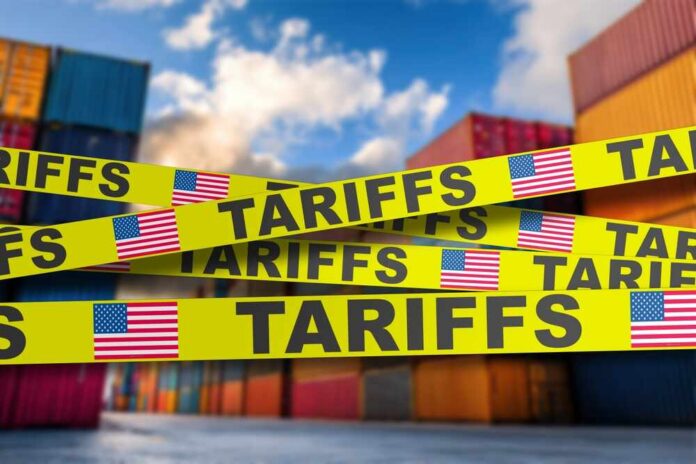
Trump’s latest tariff truce with Beijing offers U.S. farmers and manufacturers a breather—but only if China finally keeps its word this time.
Story Snapshot
- White House order locks in reduced China tariffs and suspends “trade war” hikes through November 10, 2026, under a new U.S.–China arrangement.
- Beijing promises to slash retaliatory tariffs, buy more American farm goods, and pause rare‑earth export controls that threaten U.S. industry.
- Analysts call the deal a tactical, fragile truce, not a permanent fix to China’s cheating on technology, industry subsidies, and market access.
- Conservatives must weigh short‑term relief for Main Street against the risk of letting economic pressure on the Chinese Communist Party fade.
Tariff Truce: What Trump Actually Signed With Beijing
White House officials confirmed that President Trump signed an executive order in November 2025 to implement what they describe as a “historic and monumental” economic and trade deal with the People’s Republic of China, reached after talks with Xi Jinping in Asia. The order continues the suspension of previously heightened reciprocal tariffs on Chinese imports until November 10, 2026, replacing those higher duties with an additional ten percent rate on Chinese goods instead of the punishing emergency levels used earlier in the trade conflict.[4]
That suspension follows a separate ninety‑day truce earlier in 2025, when the United States slashed emergency tariffs on Chinese products from one hundred forty‑five percent down to thirty percent, and Beijing dropped its retaliatory rates on American exports from one hundred twenty‑five percent to ten percent while negotiators worked. Trade officials said the short‑term cut created political space for this longer arrangement, even as they kept the original “national emergency” legal framework in place in case China backtracks.[4]
What China Gave Up: Retaliatory Tariffs and Rare‑Earth Leverage
The presidential order describes a rare moment of reciprocity from Beijing: China committed to suspend or remove many retaliatory measures that had targeted American farmers and manufacturers, including tariffs on a broad range of United States agricultural products, with relief running at least through the end of 2026.[4] A White House fact sheet and legal summaries say Beijing also agreed to extend its market‑based tariff exclusion process on U.S. imports, effectively lowering the cost of many American goods entering the Chinese market.[3][4]
Perhaps more strategically important, China pledged to postpone and effectively eliminate for one year its planned coercive export controls on critical rare‑earth metals and related minerals that are vital for American defense, energy, and technology manufacturing.[3][4] Trade‑risk analysis notes that China will delay new controls on several additional rare earths and suspend some extraterritorial regulations, while the United States will temporarily soften certain export‑control rules, giving Washington time to diversify supply chains away from Chinese producers without immediately escalating the conflict further.[2][3]
Benefits For U.S. Farmers and Businesses—And Why Skeptics Resist the Hype
As part of the broader understanding, Beijing committed to ramp up purchases of American soybeans, sorghum, livestock, logs, and other agricultural products, with some reports citing annual commitments in the tens of billions of dollars and multi‑year purchase schedules.[3][4] For many rural communities that bore the brunt of China’s retaliatory tariffs, the combination of lower duties and renewed buying promises at least the possibility of stronger export demand, steadier prices, and a badly needed break from years of uncertainty and depressed margins.
Trade analysts, however, warn conservative voters not to confuse tactical breathing room with a strategic victory. A prominent risk‑consulting firm labels the arrangement a tactical deal that cools tensions for now but leaves core disputes over semiconductors, industrial subsidies, and market access unresolved, describing the agreement as “fragile.”[2] Former trade officials also point to earlier Chinese promises under the 2020 “Phase One” agreement—like soybean and aircraft purchases—that were only partially honored, which understandably fuels skepticism about whether Beijing will fully deliver on this new round of commitments.[5]
Why This Matters For American Leverage, Security, and Conservative Priorities
From a conservative standpoint, the key question is whether pausing tariff pressure helps or hurts America’s long‑term leverage over the Chinese Communist Party. The White House order makes clear that the legal emergency underpinning earlier tariff hikes still exists; it has not been repealed, only managed through temporary suspension tied to the new arrangement.[4] That means Washington retains the authority to quickly snap tariffs back if China cheats again, but it also means political will must be maintained beyond the current news cycle.[4]
China, US Discuss Tariff Cuts Alongside Boeing Deal
Read more here: https://t.co/5BB5yFmPDb#GlobalTrade #Tariffs #Boeing pic.twitter.com/nNzM1LxQvg
— The Supply Chain Report (@SupplyChainRep) May 20, 2026
For families dealing with inflation and small businesses squeezed by high input costs, lower tariffs on Chinese goods and renewed access for American exports provide short‑term relief and support Trump’s broader promise to rebuild the productive economy without surrendering sovereignty.[2][4] Still, unresolved battles over technology theft, rare‑earth dependence, and industrial policy show that this truce is another round in a long fight, not the final settlement. Vigilant enforcement, transparent data on Chinese follow‑through, and a continued push to reshore and diversify supply lines will determine whether this deal strengthens America or simply lets Beijing run out the clock.[2][3][4]
Sources:
[2] Web – US-China tactical deal: Tariffs, tech, and rare earths | Coface
[3] Web – United States and China Negotiate One-Year Trade Deal – Wiley Rein
[4] Web – Modifying Reciprocal Tariff Rates Consistent with the Economic and …
[5] Web – Phase One | United States Trade Representative