
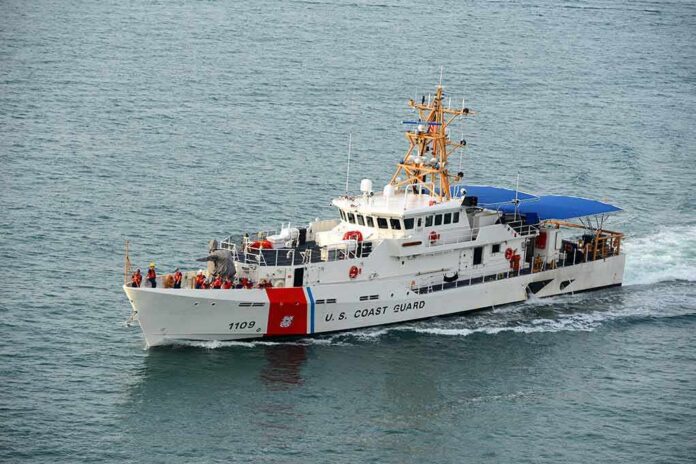
After a massive two-day effort, the U.S. Coast Guard suspended its search for six people from a Bermuda-to-Boston medevac jet after confirming debris south of Nantucket.
Story Snapshot
- Air traffic controllers lost contact with a Gulfstream G100 medical transport early Saturday.
- Six people were on board the Bermuda-to-Boston flight, officials said.
- Coast Guard air and sea crews found debris south of Nantucket and led an extensive search.
- Active search operations were later suspended; the cause has not been determined.
Contact Lost With Medical Jet En Route To Boston
Federal Aviation Administration air traffic controllers reported losing contact with a medical transport jet in the early morning hours off Massachusetts. Officials identified the aircraft as a Gulfstream G100 operating as an air ambulance from Bermuda to Boston. Authorities said six people were aboard. The Federal Aviation Administration notified the U.S. Coast Guard, which began search and rescue under standard protocol. Reports place the loss of contact shortly after 1 a.m. to 2 a.m. local time.
The route placed the twin-engine business jet on a direct path toward Boston Logan International Airport. The aircraft did not arrive as planned. The Coast Guard’s Northeast teams coordinated with aviation and surface units. The mission launched quickly after the alert. Early steps in these cases follow the National Search and Rescue Plan. Crews start around the last known position and expand the area using radar plots and probability methods as more data is checked.
Air And Sea Search Focused South Of Nantucket
The U.S. Coast Guard deployed aircraft and cutters to search waters south of Nantucket after receiving the Federal Aviation Administration alert. Crews later located a debris field that officials confirmed was from the missing medical transport jet. The find narrowed the focus area and guided search patterns across the ocean surface. The discovery underscored the urgency, as water, wind, and currents can spread debris and complicate recovery efforts over time.
Search and rescue leaders concentrated assets across likely drift zones and the last reported track. That approach reflects long-standing search guidance used when an aircraft is overdue or missing over water. Teams widen the grid as more information arrives, then shift resources as confidence in a location grows. The method aims to balance speed, coverage, and safety for responders working in changing maritime conditions near busy Northeast shipping lanes.
Search Suspended; Cause Not Yet Identified
After extensive searching, Coast Guard officials announced a suspension of active search operations. That decision followed the confirmation of debris and broad sweeps by aircraft and vessels. Officials have not identified a cause for the disappearance. Investigators typically examine maintenance records, radar data, weather, and any recovered components before reaching conclusions. Families and the medical community now await formal findings from authorities in the days and weeks ahead.
US Coast Guard ends search for 6 missing plane passengers | https://t.co/hiyaSilDRF#BritainHerald #PlaneCrash #MedicalFlight #Nantucket #Bermuda #Boston #CoastGuard #Aviation pic.twitter.com/y8gemAlHxn
— Britain Herald (@BritainHerald) October 5, 2026
Authorities emphasized clear facts: a Gulfstream G100 medevac from Bermuda to Boston lost contact, six people were aboard, debris was found south of Nantucket, and the search is now suspended. For many readers, this is a sober reminder that strong borders and strong safety systems start with accountability and clarity. The Coast Guard acted fast, and that matters. Americans respect that kind of discipline, especially when lives are at stake and answers must come from hard evidence, not rumor.
Sources:
abcnews.com, boston.com, noticias.foxnews.com