
Missile strikes on Riyadh’s main airport killed three people, wounded others, and disrupted flights, as Yemen’s Houthi movement claimed responsibility and Saudi aviation officials confirmed damage.
Story Highlights
- Saudi aviation officials said strikes at King Khalid International Airport killed three and damaged facilities.
- Houthi forces claimed they targeted Riyadh’s airport with missiles and said flights were disrupted.
- Reuters reported smoke over the airport, a damaged Saudia jet, and airlines canceling flights.
- Reports linked the Riyadh strikes to a string of Houthi-claimed attacks on Saudi airports this week.
Confirmed Impact at Riyadh’s King Khalid International Airport
Saudi Arabia’s General Authority of Civil Aviation said two strikes hit King Khalid International Airport on October 9. Officials reported three Saudi citizens killed and additional injuries among people of several nationalities. The authority said one strike hit airport facilities and a second hit a Saudia Airlines aircraft. These details match on-the-ground reports of emergency response and visible damage at the airport, which serves as a major regional hub for travel and commerce.
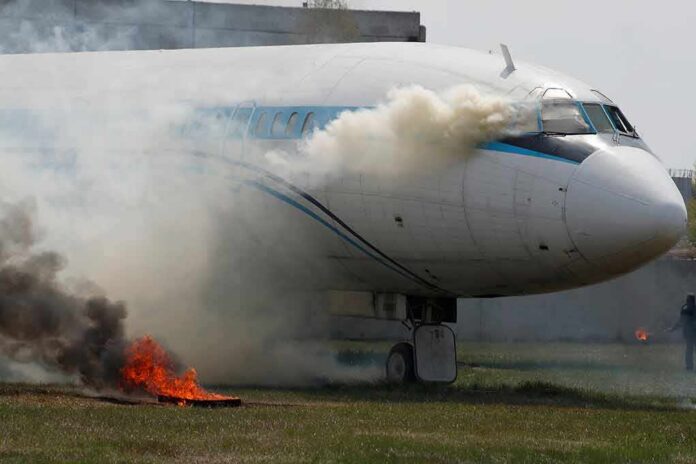
Reuters described smoke rising over the airport and airlines canceling flights into Riyadh after the strikes. The outlet also reported a Saudia aircraft suffered damage on the ground. Flight tracking showed service gradually restored later, but the initial shock disrupted travel and raised safety concerns. For travelers, families, and crews, those hours meant delays, diversions, and fear as security teams cleared areas and assessed whether more threats might follow that day.
Houthi Claim of Responsibility and Reported Disruptions
A spokesman for Yemen’s Houthi movement said the group launched ballistic and cruise missiles at Riyadh’s airport and another site, claiming the operation disrupted air traffic. The Associated Press reported the Houthi claim and witness accounts from inside the airport of explosions and evacuations. While Saudi aviation officials did not assign blame, the Houthi statement, paired with the visible damage and flight changes, formed a consistent picture of who launched the attack and what happened on the ground.
Major outlets connected the Riyadh attack to a run of strikes this week against Saudi airports. The British Broadcasting Corporation said the Riyadh incident followed earlier Houthi-claimed attacks on Riyadh and Abha airports. Cable News Network coverage described casualties across the back-to-back incidents and highlighted how the fighting in Yemen again spilled across the border. This pattern shows a clear targeting of civilian air travel that endangers families and workers far from any front line.
Why This Matters to American Readers
These airport strikes hit a key partner in a region that moves global oil and trade. They also target civilians, not just runways or military sites. Americans understand what that means. When a group fires missiles at an airport, it threatens free movement, commerce, and basic safety. The United States works with allies to stop this kind of terror. President Trump has pressed for stronger defenses and tougher consequences on those who strike civilian targets and spread chaos for political gain.
Strikes on airports raise travel risk, push up insurance, and can shake oil markets. They also embolden other bad actors who watch to see what costs follow. Saudi officials resumed flights after checks, but the message from the attackers was clear. They want fear in the skies and at terminals where families gather. Stable routes and safe hubs matter to business, troops, and aid flights. Hitting airports attacks the backbone of daily life and economic freedom in the region.
What Authorities Confirm and What Comes Next
Saudi aviation authorities confirmed where the strikes hit, the deaths, and the aircraft damage. Houthi officials said they fired the missiles. Major outlets documented smoke, evacuations, and canceled flights. These facts line up on the core point: missiles struck the Riyadh airport area and killed civilians. Officials may release more details on weapon types and launch points, but the known facts already show a serious attack on civilian infrastructure with human costs and wider risks.
🇾🇪⚡️🇸🇦 The Saudi Civil Aviation Authority announced in a statement that as a result of the attack by the Houthi movement on King Khalid International Airport in Riyadh, 12 people were killed and 309 were injured, with some in critical condition.The victims includes 4 Saudis
— WarSaWitness (@WarSpectators1) October 11, 2026
Security teams in Saudi Arabia will evaluate defenses and adjust flight operations. Airlines will review routes and ground procedures. Regional partners will weigh pressure on the Houthi movement and its networks. For readers at home, the takeaway is simple. Civilian targets must never be fair game. America stands for safe travel, strong borders, and law and order. Attacks like this test that resolve. They should bring a firm response that protects innocent people and keeps the skies open.
Royal Saudi Air Force F-15SA and Typhoon fighters launched precision strikes east of Taiz and across 130 sites in Yemen following the Riyadh airport attack. Using GBU-12 laser-guided bombs, JDAMs, and BLU-109 bunker busters, RSAF targeted Houthi frontline command bunkers,… pic.twitter.com/BFUzqmsnW2
— Defense News IN (@DefenseNewsIN) October 11, 2026
Sources:
feedpress.me, apnews.com, reuters.com, abcnews.com