
A Tesla Roadster prototype used SpaceX-style thrusters to lift off, roll in the air, and land at a Texas test site.
Story Highlights
- Witnesses reported a brief airborne roll and safe landing by a Roadster prototype at SpaceX’s McGregor site.
- Reports said SpaceX supplied cold-gas thrusters, with claims of very high thrust output.
- The airspace around the site carried a federal temporary flight restriction during testing.
- Coverage stressed limits: short hops, no driver onboard, and no public-road approval for the rocket setup.
What The Prototype Did In Texas
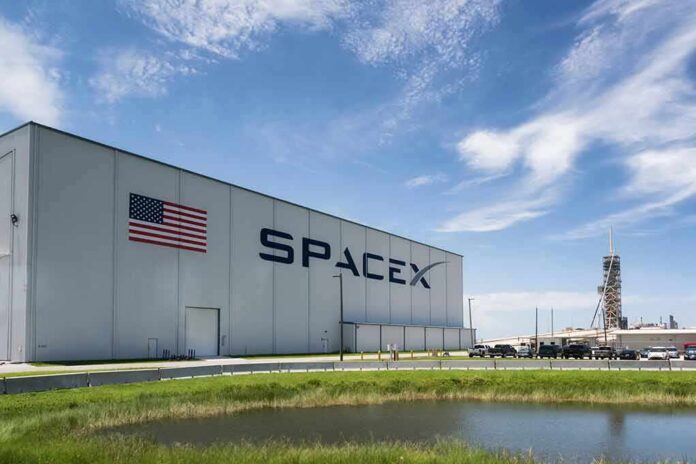
Car and Driver reported that a Tesla Roadster prototype flew forward, performed a barrel roll, and then landed at SpaceX’s McGregor facility in Texas. The report linked the maneuver to SpaceX-supplied thrusters mounted on the car. Audacy described a ramp-assisted sequence that used a fan-based suction system and cold-gas thrusters to climb, invert, launch, spin, and return to the ground. These accounts match a controlled, short airborne hop, not a point-to-point flight across town.
MotorTrend pointed to a federal notice that set a temporary flight restriction around the McGregor test site. The notice reportedly covered a one and one-half nautical mile radius and extended up to ten thousand feet, consistent with unusual flight testing at the facility. That context helps explain why the demonstration ran under tight control. It signals planning, safety boundaries, and coordination with federal authorities during the test window.
How The System Reportedly Works
Coverage described cold-gas thrusters and a suction system, not liquid fuel rockets. WPXI reported the system as cold-gas jets paired with multi-mode suction that can help the vehicle grip surfaces and then launch for a brief aerial spin. Car and Driver noted claims that the thrusters delivered more than eighty kilonewtons of force, a very large figure for an automotive demonstrator. The setup aims to give short bursts of thrust and attitude control, which fits the brief airborne roll that observers reported.
Wired and other outlets said the flight covered only a few dozen feet and that no person rode inside during the stunt. Development Today also emphasized the lack of a human occupant, which means passenger safety in flight was not shown. These details frame the event as an engineering display. The car moved through the air under its own propulsion, but only for seconds and without a driver. That matters for what comes next: proving repeatability, safety, and clear limits.
Road And Air Rules Will Decide What Comes Next
WPXI reported that Tesla’s own fine print says the rocket-equipped configuration is “not approved for public road use,” drawing a sharp line between a test rig and something owners can drive legally. Wired and Development Today both stressed that leaving the ground triggers federal aviation oversight. No path to aviation approval was identified in the reporting. Without a defined category, buyers, insurers, and local officials face uncertainty about how, where, and by whom such a machine could operate.
🚀 SCIENCE EXPLAINED: HOW TESLA’S NEW ROADSTER USES SPACEX-STYLE THRUSTERS TO DEFY GRAVITY
Is Elon Musk bringing rocket technology to the road? Tesla’s newly revealed Roadster combines a suction system designed to hold the car against an inverted ramp with SpaceX-style cold-gas…
— Ryan Eminhizer 🇺🇸 (@ryan_eminhizer) October 16, 2026
For conservative readers, the lesson is simple: innovation thrives when rules are clear and limited to real safety needs. The Texas test showed a real, if brief, airborne capability. But agencies can smother progress with red tape. A narrow, transparent route for experimental vehicles would let American companies prove ideas faster, while keeping the public safe. Until then, expect more eye-opening demos and the same bottleneck: short hops in a cage of regulation, not freedom to advance on merit.
Sources:
newsweek.com, audacy.com, wired.com, motortrend.com, developmentstoday.com, teslarati.com