
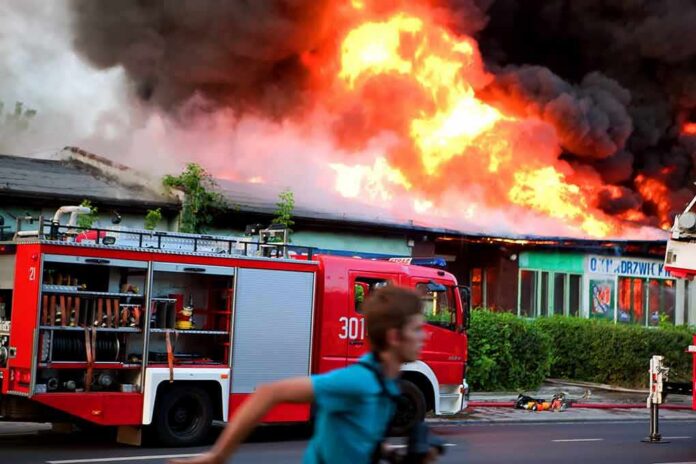
Arsonists torched a 19th-century city hall in Limoges as riots spread across France, targeting government buildings and police in multiple cities.
Story Snapshot
- Historic city halls and public buildings were attacked; Limoges city hall suffered major arson damage.
- Police made over 2,000 arrests nationwide as violence spread beyond Paris to several cities.
- French leaders blamed radical far-left groups and criminals for the worst unrest in years.
- Large peaceful marches over schools and living costs ran alongside violent fringe attacks.
Coordinated Attacks on Symbols of the State
News outlets reported attacks on city halls and public buildings in several cities, not just Paris. Reporters described a nighttime arson that largely destroyed Limoges’ 19th-century city hall, while city halls in Lille and Marseille were also targeted. Widespread fires, smashed storefronts, and assaults on police vehicles marked the worst street violence in years. The choice of targets—local seats of government—sent a direct message against state authority and civic order.
Police and firefighters moved across multiple fronts as violence broke out in cities including Paris, Marseille, Lyon, Lille, and Limoges. Scenes included looting, street fires, and clashes with officers in riot gear. The unrest did not stay local; it spread through urban centers many miles apart, creating pressure on emergency services and testing command structures. That spread suggests more than a single flashpoint, even as many residents tried to steer clear and protect homes and businesses.
Arrests, Injuries, and Government Response
Authorities detained thousands as the situation escalated. Reuters reported more than 2,000 arrests across France and hundreds of injured officers, reflecting not only crowd size but a sustained level of criminal conduct near or within protest zones. The British Broadcasting Corporation earlier reported at least 1,200 arrests during the main protest day, showing rising totals as police processed detainees and updated counts. These figures indicate heavy strain on law enforcement and courts as cases move forward.
President Emmanuel Macron, Prime Minister Sébastien Lecornu, and Interior Minister Laurent Nuñez attributed the violence to radical far-left elements working with criminals. Their statements labeled the perpetrators as “ultra-left” or “insurrectionist” groups that sought to provoke and damage the Republic. Officials promised accountability while saying peaceful protesters should be heard, a balance that acknowledged real grievances but drew a hard line against attacks on the state and police. That message set the frame for coming investigations.
Peaceful Crowds vs. Violent Fringe
While the damage was severe, outlets also noted that many people marched peacefully over school conditions and the cost of living. Coverage described hundreds of thousands taking part without incident while smaller, violent groups split off to attack public buildings, loot shops, and confront police. This split matters: it differentiates civic engagement from organized vandalism and makes clear that most participants did not burn, loot, or assault officers.
Unions and student groups cited teacher shortages, worn-down school buildings, and rising prices. Those concerns helped bring many families and workers into the streets. That mix created a complex map: parents and students marching by day, then masked groups appearing when crowds thinned or police lines shifted. Officials now face two urgent tasks—protect ordered protest and isolate violent offenders—without erasing the voices of peaceful demonstrators.
What We Know—and What We Still Need to See
The record shows arson at government sites, looting, and widespread clashes along with mass arrests and injuries. It also shows top leaders blaming the radical left and criminals. What the reports do not yet show is a verified breakdown linking most arrestees to named far-left organizations or a single national command structure directing violence. That evidence may emerge from court files, intelligence assessments, and fire investigations in the weeks ahead.
The nationwide riots in France were sparked by student-led protests over poor school infrastructure and teacher shortages. This rapidly expanded into a broader crisis fueled by anger over the high cost of living and proposed austerity budget cuts.
— Anonymous Dominator (@Anonymoustested) October 19, 2026
For readers at home, the takeaways are clear. Peaceful protest is a right, but arson and looting are crimes that tear at civil order. When radicals and criminals hijack marches, families and small shops pay the price. Strong policing, clear charges, and swift trials deter copycats. Honest leaders can hear lawful grievances while defending the rule of law. The French crisis shows how fast order can break—and why our own communities must stand firm on safety and accountability.
Sources:
nytimes.com, bbc.com, npr.org, reuters.com