
CBS News deleted a social media post that called France’s burning, looting riots mere “scuffles” between “small groups of protesters” — even as its own reporters documented 1,800 arrests, torched cars, and ransacked schools.
Quick Take
- CBS reportedly called violent French riots “scuffles” in a now-deleted post, drawing sharp criticism online.
- French police arrested more than 1,800 people in one weekend of unrest, with over 5,000 arrests tied to the broader movement.
- CBS’s own reporting described burned cars, looted shops, tear gas, water cannons, and a teenager losing a hand to a police grenade.
- More than 560 schools were disrupted and over 100 high schools suffered severe damage during weeks of student unrest.
- Critics say the soft wording fits a pattern of legacy media downplaying left-wing violence abroad and at home.
A Deleted Post Sparks Outrage
Americans noticed something strange in CBS’s coverage of France’s violent unrest: a social media post describing the chaos as “scuffles” involving “small groups of protesters.” The post was later deleted. The vague wording stood out because it did not match the destruction French police and CBS’s own journalists were documenting on the ground across the country.
Critics online quickly pointed out the gap between CBS’s soft label and the reality of burning cars, looted shops, and officers firing tear gas and water cannons at crowds. The backlash fit a familiar complaint from conservatives: major networks often reach for gentler words when describing left-leaning unrest, while reserving harsher terms like “riot” for other movements.
What Actually Happened In France
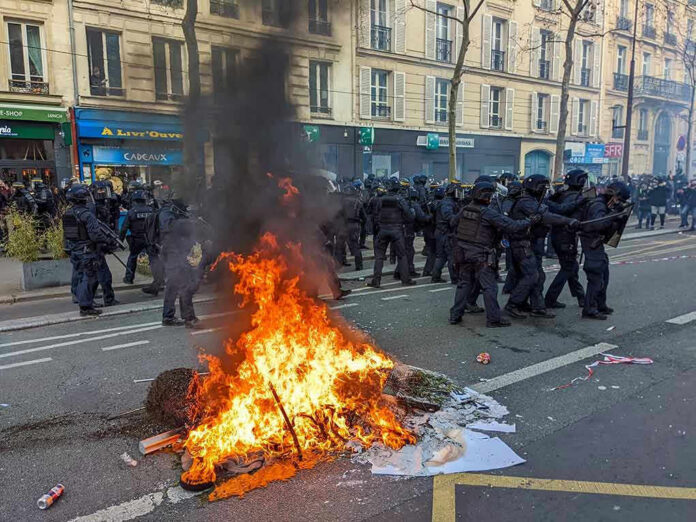
French police arrested more than 1,800 people after violence erupted nationwide in mid-October. Masked groups set fires, attacked public buildings, torched cars, and looted stores while officers responded with tear gas and water cannons, according to CBS’s own detailed reporting. That single weekend alone produced chaos far beyond what the word “scuffles” would suggest to any reader scrolling past a headline.
The unrest did not start overnight. CBS reported weeks earlier that more than 560 schools and businesses had already faced closures or disruptions, with over 100 high schools suffering “severe damage” from fires and clashes. Independent reporting from CNBC confirmed violent groups were targeting public buildings, looting supermarkets, and attacking police vehicles and officers directly.
Injuries And Arrests Pile Up
The human cost went beyond property damage. CBS reported that a 15-year-old boy lost his hand after picking up a police grenade during the clashes, while 24 schools were burned or ransacked and bus shelters were destroyed. More than 5,000 people were arrested since the movement began, including over 4,000 teenagers, according to CBS’s own tally of the broader unrest.
To be fair, CBS’s full body of reporting did not hide these details. Across multiple articles, the network described fires, looted shops, injured protesters, and mass arrests in plain terms. The “scuffles” wording appears to have been limited to one specific social media post rather than the network’s entire body of coverage, and the original post was deleted before it could be fully archived.
Why The Wording Still Matters
That distinction does not erase the problem. Even if “scuffles” referred to one localized incident, the word choice minimized violence that French officials themselves have condemned. Education Minister Edouard Geffray said the student movement was “being held hostage by ultra-violent fringe groups” — language far closer to “riot” than to “scuffle.”
Media researchers note that outlets often default to softer “confrontation” or “protest” frames instead of “riot” frames, even when arson, looting, and mass arrests are documented. For conservative readers who have watched American networks downplay riots following George Floyd’s death while amplifying concern over Capitol protests, the pattern feels familiar. Word choice shapes public perception just as much as the facts themselves.
France’s unrest began over real grievances — overcrowded classrooms, teacher shortages, and rising living costs. Those complaints deserve honest coverage. But honest coverage also means calling arson, looting, and mass arrests what they are, rather than softening them into a word that sounds like a schoolyard scrap.
Sources:
thegatewaypundit.com, cbsnews.com, abcnews.com, cnbc.com, reuters.com