
Left-wing activists formed a human wall to block federal immigration vehicles in downtown Philadelphia, forcing police to clear a path as morning traffic stalled.
Story Snapshot
- About 30 protesters with No ICE Philly blocked a federal garage exit in Center City.
- Organizers said they aimed to stop immigration vehicles from leaving the site.
- Police moved protesters aside so at least one vehicle could depart; no arrests were reported.
- Similar tactics in 2025 led to 15 arrests after hours of street disruption, police said.
Human Blockade Targets Federal Garage Exit
On January 20, 2026, about 30 demonstrators formed a human blockade at the immigration office garage at 8th and Cherry Streets in Philadelphia. Organizers with No ICE Philly said the goal was to keep government vehicles from “leaving the facility to terrorize our neighbors.” Police arrived and shifted protesters aside so a vehicle could exit. Reporters on scene said the demonstration ended without arrests and without reported property damage that morning.
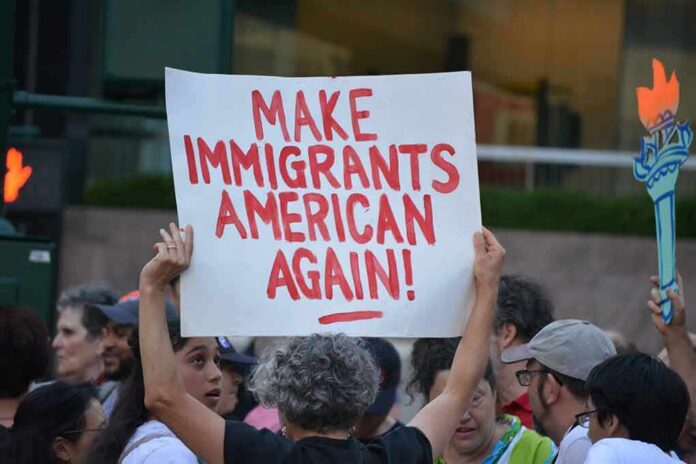
Organizers framed the action as a public stand for immigrant neighbors and dignity. Local coverage described singing, chanting, and clergy participation. Protesters said they would stay until moved or arrested, underscoring that the event was planned civil disobedience, not a spontaneous street snarl. The message focused on fear in the community, while the tactic sought to delay federal movement from the building’s garage and draw cameras and attention to their cause.
Police Response Balanced Access And Crowd Control
Police on site managed the line, created space, and ensured at least one vehicle exited the garage. The scene contrasted with more tense protests seen in prior years, when larger marches spilled into main streets. On this day, officers used minimal force and made no arrests, according to reporting. The brief, controlled clearance shows how targeted enforcement can restore access while allowing speech, a balance that respects order and the First Amendment’s protections of peaceful assembly.
Officials and the public should expect consistent enforcement when any group blocks vehicles, especially near a federal site. The Constitution protects speech, not obstruction of traffic or emergency access. When police act early and keep exits open, they protect everyone’s rights. That includes workers who need to pass, families trying to get to appointments, and the federal personnel carrying out lawful duties. Clear rules and quick, measured action reduce conflicts and prevent escalation.
Pattern Of Repeat Tactics And Rising Risks
Philadelphia has seen repeated actions aimed at the same facility, mixing sit-ins, blockades, and marches. Research on disruptive protest shows a tradeoff: Blockades often gain more media attention but turn public opinion against the tactic itself. That pattern fits here, where coverage highlighted the obstruction while also quoting activist claims. The approach can raise the issue’s profile, but it also risks alienating commuters and neighbors who bear the disruption cost.
Officials said similar protests in 2025 lasted hours, blocked major roads, and ignored three dispersal orders. Police reported 15 arrests after marchers used bicycles to obstruct officers and traffic, and two officers were injured in related clashes, according to local and national coverage that cited police accounts. Those events show how fast a street action can shift from messaging to mayhem when roadways are seized and commands are disregarded. That carries legal and safety risks.
Security, Rule Of Law, And Community Safety
Federal immigration enforcement is a lawful function under national policy. Blocking vehicles is not a policy debate; it is interference with operations. Protesters can stand on the sidewalk, carry signs, speak, and petition. They cross a line when they stop traffic or block access to a building or garage. City leaders and police must keep exits open and hold any vandalism or assault accountable, as they did when they made arrests and cited endangerment in earlier incidents tied to these marches.
President Trump and Vice President Vance support strong borders and law enforcement. Local officials now share the duty to keep order while allowing peaceful speech. The Philadelphia response on January 20 shows a model: protect the right to speak, clear the way for vehicles, and avoid needless escalation. That is how a free society handles heated issues—by upholding the law, protecting bystanders, and keeping streets and garages open so life and lawful work can continue.
What To Watch Next
Public records from police and federal agencies could confirm the timeline, clarify whether any scheduled operations were delayed, and show how officers weighed safety and assembly rights. Permit records would also answer if the area was lawfully reserved. Repeat actions tend to invite tougher enforcement, as seen in prior arrests and charges. The lesson is simple: speak freely, yes—block roads and exits, no. That balance guards both liberty and order for everyone.
Sources:
youtube.com, inquirer.com, whyy.org, cbsnews.com