
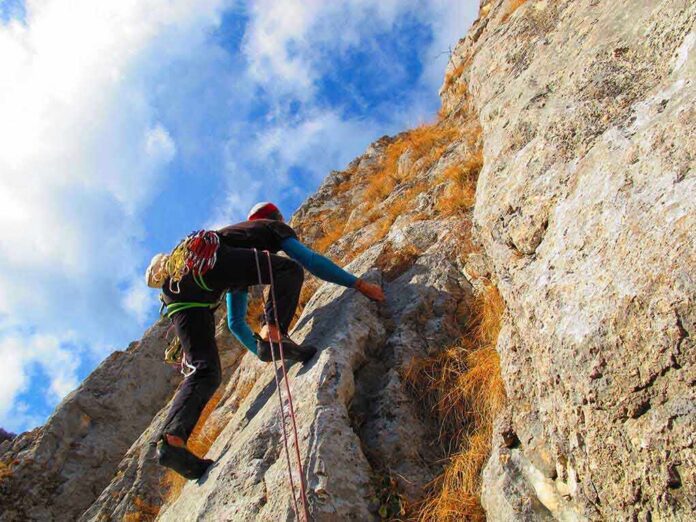
A California climber survived a roughly 500-foot slide on Mount Shasta, then crawled through the night to reach a cabin where rescuers found him.
Story Highlights
- Officials say the San Jose man lost control while glissading and slid about 500 feet.
- The climber suffered severe foot injuries, removed his boots, and crawled overnight to Horse Camp Cabin.
- A hiker found him the next day; rangers coordinated an airlift to a hospital.
- Mount Shasta advisories have long warned that glissading on firm snow can be dangerous.
Rescuers Describe A Harrowing Night On Mount Shasta
U.S. Forest Service officials and local outlets reported that a San Jose climber attempted to glissade, lost control, and slid roughly 500 feet down the Avalanche Gulch route on Mount Shasta. During the fall, he suffered deep cuts and serious injuries to his feet. With his phone dead, he removed his boots due to swelling and crawled through the night until he reached Horse Camp Cabin. A hiker discovered him the next day and alerted rangers, who organized a helicopter evacuation.
Local and national coverage aligns on key facts. Reports say the man survived the slide, self-rescued over rugged terrain, and reached shelter before help arrived. Authorities emphasized the danger of uncontrolled slides on firm snow and ice, a known risk during shoulder-season conditions. The Avalanche Gulch route draws many climbers, which can lead to more incidents when people descend late in the day or on hard, slick surfaces without a safe runout.
Why Glissading So Often Goes Wrong On Firm Snow
Mount Shasta Avalanche Center guidance warns climbers not to glissade on firm snow. Advisories stress taking off crampons, making sure the snow is soft, and controlling speed. A hard, icy surface turns a “quick slide” into an uncontrollable chute. That is when an ice axe arrest often fails, and injuries rise fast. The center’s conditions posts repeat the same rule each season: do not glissade when the slope is hard. It is, in their words, a recipe for disaster.
Incident summaries from Mount Shasta show repeated accidents tied to uncontrolled descents. Rangers routinely note late-day firm snow, long runouts ending in rocks, and climbers who lack training in self-arrest. These are preventable errors. The wilderness is open to the public, but that freedom comes with personal responsibility. Good planning, early turnarounds, and respect for conditions save lives and reduce strain on volunteer and county rescue teams.
Personal Responsibility And Preparedness Beat Risky Shortcuts
This rescue highlights a simple truth: mountain safety depends on personal choices. Starting early, checking daily advisories, and carrying the right gear matter. So does skipping risky shortcuts like glissading on hard snow. Freedom to climb does not mean freedom from risk. It means each person owns the outcome. When people prepare well, they protect themselves and spare first responders from dangerous, costly missions that pull resources from other emergencies.
Officials did not release the climber’s name. Reports say he was airlifted to a hospital and is expected to recover. His survival shows grit under pressure and the value of reaching known shelters like Horse Camp. It also offers a clear warning for the fall and winter climbing window. Read the advisories. Pack for a night out. Keep your phone charged and carry a backup light. Most of all, descend only when snow is soft and safe for a controlled slide.
Sources:
nypost.com, shastaavalanche.org, ground.news