
President Trump says the planned 250-foot Triumphal Arch will also serve national security as a “top grade Military Complex,” even as federal reviews move the project forward.
Story Highlights
- Federal planning advanced the 250-foot arch at Memorial Circle with mitigation steps documented.
- The National Capital Planning Commission granted preliminary site and building approval.
- Trump said the arch will double as a “top grade Military Complex” for security needs.
- National Park Service found “adverse effects” on historic views but outlined a path to proceed.
Where the Project Stands in Federal Reviews
National Park Service planning documents describe a 250-foot Triumphal Arch at Memorial Circle and circulate a mitigation framework under preservation law. The record includes vibration monitoring, archaeology, and traffic protections rather than a flat denial, showing the process is active and structured. The National Capital Planning Commission provided preliminary site and building approval, keeping the design path open while more steps continue. These actions confirm the proposal exists in official channels, not just in rhetoric.
Administration materials and reporting say construction could take two to three years if fully approved. Work plans discussed long daily shifts to compress timelines and reduce closures, reflecting a push to control costs and limit disruptions. President Trump announced in April that his team filed formal plans and renderings with the federal design commission. That filing underscored a heritage case and a ceremonial gateway function for the nation’s capital corridor along the Potomac River.
Trump’s Security Framing and the “Military Complex” Claim
President Trump said he agreed to convert the project into a “top grade Military Complex/Triumphal Arch” for national security and at the request of the United States military. Supporters see this as aligning symbolism with strength. However, the public record summarized in reporting centers on monument design and preservation review. The gathered materials do not yet include military mission documents, force-protection requirements, or engineering drawings that explain the complex’s security functions in detail.
That gap does not erase the Commander in Chief’s stated aim. It does show the need for clear documentation that matches the claim. A formal statement from the Department of Defense or the Army would answer key questions about purpose, staffing, and access control. If the site hosts protective systems, agencies can outline how they will protect visitors, traffic, and neighboring memorials while meeting security needs. Publishing that record would strengthen public confidence and reduce confusion.
Historic-View Impacts and Mitigation Path
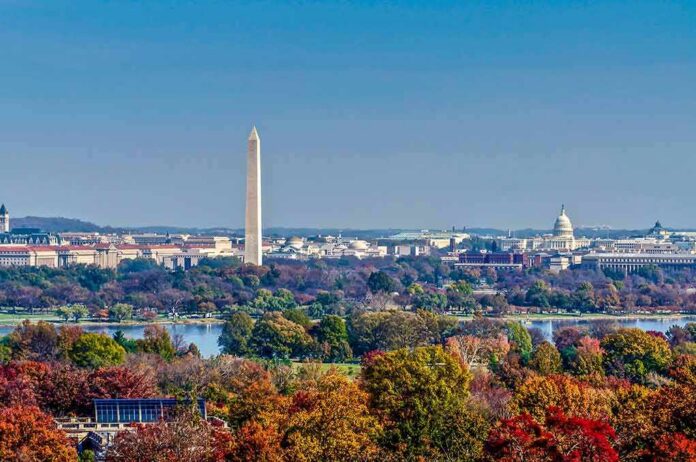
The National Park Service found the arch would cause adverse effects to historic properties and views, including the symbolic axis between the Lincoln Memorial and Arlington National Cemetery. Planners proposed mitigation steps in a draft memorandum, such as monitoring vibrations and documenting changes, rather than rejecting the site entirely. Critics argue that adverse effects on sacred ground and sightlines are unacceptable, and some have gone to court. Those opponents say the project lacks fresh, specific authorization for this scale and setting.
Federal reviewers continue to balance two duties: protect historic resources and advance national commemorations. The Park Service’s own language calls the location consistent with a ceremonial gateway that honors valor and sacrifice. That is why the agency kept the site in play while requiring mitigation. This is the crux of Washington planning fights: who defines national memory and how much visual change is allowed near hallowed spaces.
What Comes Next: Approvals, Transparency, and Trust
Next steps hinge on final design review, completion of preservation compliance, and clarity on funding. Reporting shows preliminary approval is done, but more decisions remain before full construction proceeds at scale. Transparency will matter. If the arch carries a security role, the administration can release non-sensitive justifications to explain scope and safety measures. Clear goals, firm timelines, and defined budgets would help taxpayers judge value and stewardship.
🚨 JUST IN: President Trump reveals at the request of the military and for national security, he is converting the Triumphal Arch in DC to a MILITARY complex/arch that will “house, store, and have the rapid ability to use large numbers of drones, plus Snipers” 🔥
“On both the…
— Theusadailynews (@thescottbessent) September 20, 2026
Conservatives want strength with respect. They want projects that honor service, defend the homeland, and protect limited government spending. This arch can meet that bar if leaders lock in lawful approvals, publish the mission fit, and guard the sacred character of Arlington’s views. Patriots can support a proud gateway for America while demanding paperwork that proves the security case and shields our monuments from needless harm. Results, not slogans, will decide this legacy.
Sources:
theguardian.com, yahoo.com, cnbc.com, washingtonian.com, politico.com, thehill.com