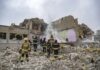

Deadly clashes in Tell have exposed how fast the West Bank can slide from a local incident into wider unrest.
Quick Take
- The Tell clash left four Palestinians and two Israelis dead, according to multiple reports.
- Israeli forces then imposed roadblocks, curfews, and new raids across the northern West Bank.
- Several outlets reported settler reprisals against Palestinian villages after the shooting.
- The facts support a sharp escalation, but they do not by themselves prove a full West Bank collapse.
What Happened in Tell
Reports from Reuters, CNN, and the Associated Press described the July 24 clash near Tell, west of Nablus, as a deadly confrontation that killed six people and set off a fast Israeli security response. CNN said the Israeli military prepared a large-scale operation, while Reuters said troops set roadblocks and pursued others involved in the incident.
Several accounts said the confrontation started when settlers entered an area they were not cleared to visit. CNN quoted the military calling it an unauthorized and uncoordinated hike, and NPR said the settlers entered a Palestinian village in an area off limits to Israeli citizens. PBS and the Associated Press added that Israel later widened its troop presence across the West Bank.
Why the Aftermath Mattered
The response after Tell was broader than a single firefight. ABC News reported more than 130 Palestinians were detained in weekend raids, while The Jerusalem Post said roads and village entrances were blocked and dozens were detained after the clash. Those steps matter because they show how quickly a local event can spread into a wider lockdown that touches ordinary life in nearby towns and villages.
Coverage also described revenge attacks by settlers. ABC News reported that houses in a neighboring village were firebombed and that a mosque in Qusra was vandalized with the word “revenge,” while The Times of Israel described mass reprisals by settler extremists across the West Bank. That kind of violence turns one deadly incident into a second crisis, because each attack makes the next one more likely.
What This Says About the West Bank
The strongest factual point is not that Tell alone proves a coming collapse. The stronger point is that Tell fits a pattern of fast escalation, harsh military reaction, and retaliatory violence that has become common in the northern West Bank. Reuters and other outlets said officials worried the situation could spread further, and some commentators warned of an uncontrolled cycle of violence.
That broader warning should be read carefully. The record here shows a serious flare-up, not a full statistical proof of a breaking point. Casualty counts and sequence details also vary across reports, which makes the chain of events harder to pin down with precision. Even so, the pattern is plain enough to raise concern: one clash quickly became raids, detentions, roadblocks, and renewed attacks on civilians.
An investigation by the Israel Defense Forces into last month's deadly clash in the West Bank village of Tell has found that the hike by Israeli settlers in the area was not coordinated or approved by the army, despite efforts by the military to obtain details about the trek.… pic.twitter.com/ORckOWEXdR
— Emanuel (Mannie) Fabian (@manniefabian) August 5, 2026
For conservative readers, the deeper issue is state control and public order. When authorities cannot keep a lid on unauthorized incursions, retaliatory violence, and mass disruptions, the result is not stability. It is a system under strain. The Tell episode shows how fast a failed field response can drag whole communities into chaos, while leaving families, roads, and schools to absorb the cost.
Sources:
thelevantfiles.org, youtube.com, english.ahram.org.eg, middleeastmonitor.com, news.un.org, facebook.com, efe.com